
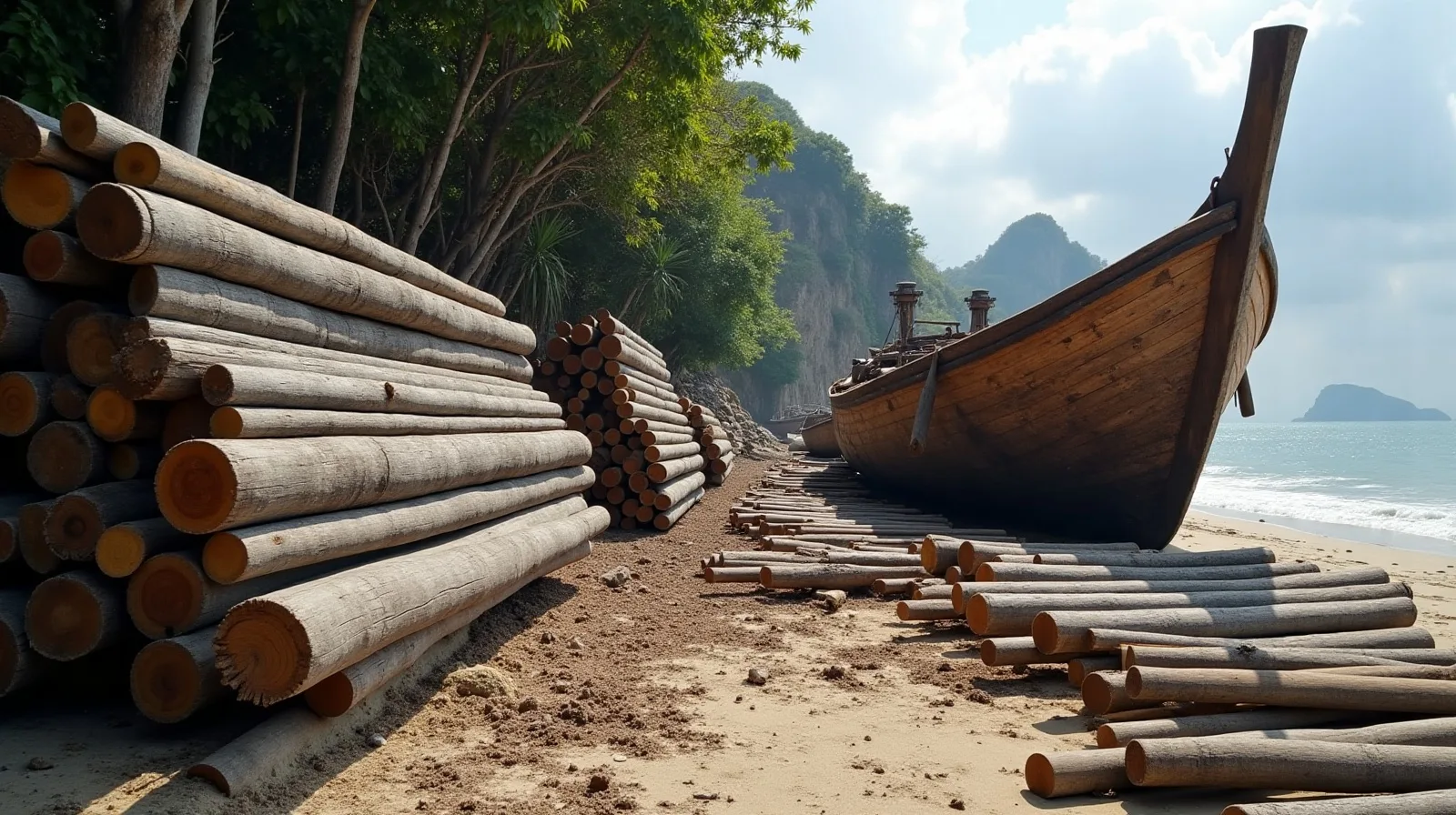
Seasoning Timber the Bulukumba Way: Years Before the First Cut
In Bulukumba, boat timber is seasoned the patient way: felled at the right moon and season, moved slowly from forest to coast, then stacked, stickered, and air-dried in the yard — often for one to three years for structural ironwood and bitti — before a saw ever touches it for a hull. There are no kilns on the beach at Tana Beru. Time, airflow, and a master’s eye are the drying technology, and they are a large part of why phinisi hulls built from properly seasoned timber serve for decades in commercial charter work.
Why Seasoning Decides a Hull’s Fate Before the Build Begins
Wood is a living material that keeps exchanging moisture with the air long after felling. Build with timber that is too green and the hull will shrink, check, and open its seams as it dries in service; fasten planks over frames while both are still moving and the structure works itself loose years early. Season timber correctly and the opposite happens: joints stay tight, dowels grip, and the hull settles into a stable equilibrium with the humid tropical air it will live in. Every visitor to the yards notices the stacks of grey, weathered planks before they notice the boats — that inventory of waiting wood is the yard’s real order book, and buyers who understand boat building in Sulawesi learn to read it.
The Bulukumba Sequence: From Forest to Stack
Local practice follows a sequence that has survived because it works:
- Selection and felling. Elders traditionally time felling to season and even to lunar phase, and — more practically — to the tree’s maturity and grain. Crooked limbs and buttresses are prized for naturally curved frames and knees, straight boles for keels and planking.
- Slow transport. Ulin (ironwood) sourced from Kalimantan and bitti from Sulawesi’s own forests travel by truck and inter-island ship. The weeks in transit begin the drying gently; our sourcing chain is described in our post on where Bulukumba’s ulin comes from.
- Conversion. Logs are sawn oversize into baulks and flitches, because timber dries from the surface inward and thick stock protects the heart from checking.
- Stacking and stickering. Sawn stock is stacked off the ground on bearers, separated by stickers so air moves across every face, weighted on top to restrain warp, and shaded from direct sun and rain. The yard’s sea breeze does the rest.
- Waiting. Planking stock may stand a year; dense structural ironwood far longer. Masters test readiness by weight, sound, and how a trial cut behaves — not by a moisture meter, though modern commissions add metered checks for documentation.
Species, Density, and Drying Behaviour
The three timbers that define a Bulukumba build dry very differently. Ironwood is so dense it gives up moisture grudgingly — which is why keels and deadwood are cut from long-seasoned stock and why yards hoard it. Bitti, the traditional planking and frame timber of the phinisi, is more cooperative but prone to surface checks if rushed in full sun. Teak, used for decks and joinery, is the most forgiving of the three and the most stable once dry. Grade rules, dimensions, and acceptable defect standards for each are documented for clients on our ironwood and teak standards page.
What “Years Before the First Cut” Means for Your Schedule
Seasoning is the honest explanation behind two things every prospective owner should understand. First, lead time: a yard that quotes a fast start is either holding seasoned stock already — good — or planning to build green, which you do not want. When we scope a commission, timber inventory is one of the first questions we put to the yard, and it is written into the specification before the keel stage payment is released; the full milestone structure is on our how to commission page. Second, cost: seasoned ironwood and first-grade teak are capital the yard has tied up for years, and that patience is priced into an honest quotation. Budget ranges in USD for typical hull sizes are laid out in our phinisi price guide.
The payoff arrives in service. Hulls planked from well-seasoned bitti over ironwood keels are what allow boats from this coast to run year-round charter schedules — the operating standard our sister fleet applies through Komodo Luxury’s boat services in Komodo waters, where a hull that moves and leaks is a hull that loses seasons.
Tradition Meets Verification
None of this is mystical. Air-drying to equilibrium moisture content is exactly what modern wooden-boat practice prescribes for the tropics; Bulukumba simply arrived at it generations earlier and enforces it through reputation rather than paperwork. Our role is to add the paperwork: recording species, stock age, and metered moisture readings at survey points so an overseas owner has evidence, not assurances. It is the same translation work we do across the whole build, from timber stack to launch on the Bira coast.
How long is ironwood seasoned before use?
Structural ironwood is ideally seasoned for two to three years after conversion, and yards prefer stock that has stood even longer. Its density means the core dries very slowly, so masters cut keels and stem pieces only from baulks they trust by age and behaviour.
Why not kiln-dry the timber and save years?
Kilns of the size needed for 20-metre keel baulks do not exist on this coast, and aggressive kiln schedules can case-harden dense hardwoods — dry outside, wet inside — which is worse than patience. Air-drying to the local equilibrium also matches the timber to the exact climate the boat will live in.
Can I verify the timber on my build is properly seasoned?
Yes. We record the stock’s provenance and standing time, take moisture-meter readings witnessed at yard visits, and hold the keel milestone until the specification is met. Seasoning claims become documented facts in your build file.
Does seasoned timber ever run short?
It is the tightest constraint on the coast’s capacity. Yards with deep stacks can start sooner; others must buy and wait. This is a genuine scheduling factor we check before matching your commission to a yard.
Planning a build and want to know what timber is standing ready right now? Message us on WhatsApp at +62 811-3941-4563 or write to bd@juaraholding.com for a current stock and lead-time picture.