
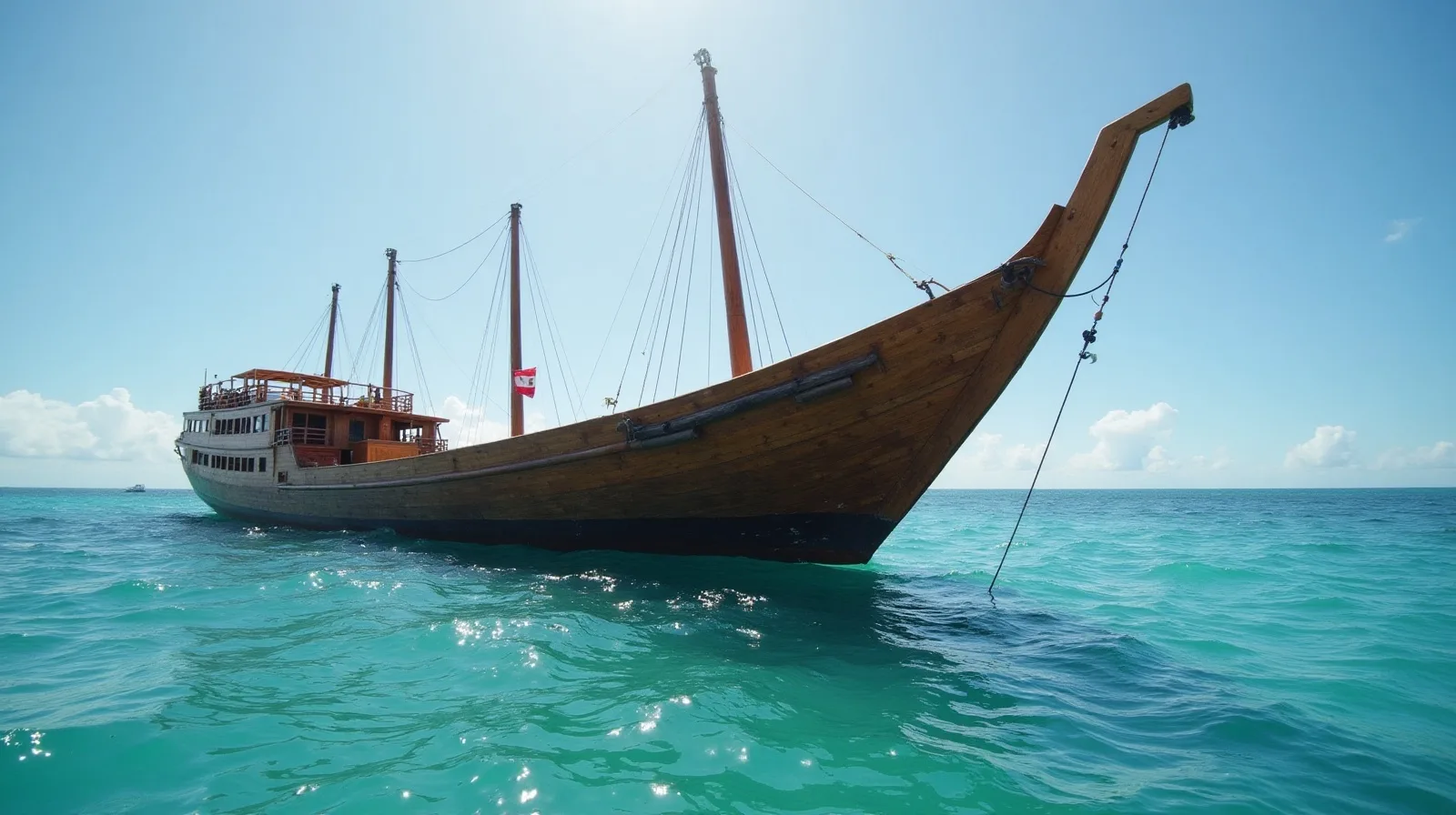
Hull Forms of the Bira Coast: How Phinisi Shapes Evolved
The hull forms built on the Bira coast evolved through function: the classic phinisi shape — sweeping sheer, raked stem, full midbody, and a proud transom — was refined over generations of cargo sailing under the pinisi rig, then adapted again when engines arrived and again when charter became the coast’s main market. Today’s yards at Tana Beru and Bira build recognisably the same family of hulls their grandfathers built, stretched and re-proportioned for cabins, stability, and guest decks rather than copra and timber freight.
First, a Definition Worth Getting Right
Strictly, “pinisi” names a rig — the two-masted, seven-sail schooner-ketch arrangement that Sulawesi’s traders perfected — not a hull. The hulls beneath that rig belonged to an evolving family of Sulawesi trading forms, built by the Konjo shipwrights of Bulukumba. In modern usage, “phinisi” has come to mean the whole vessel type descended from that tradition, and the yards themselves use it that way. The distinction still matters for understanding the shapes: rigs changed fast when engines arrived; hulls changed slowly, because hull wisdom — how a shape carries cargo, takes a monsoon sea, and dries out on a beach — is the deeper inheritance. It is the knowledge UNESCO’s 2017 inscription protects, held by the master builders profiled across our builders of Bira and Tana Beru page.
The Cargo Century: Form Follows Freight
The classic trading hull was a working compromise struck brilliantly: full sections amidships for cargo volume; a long straight keel for directional stability on passage and for taking the ground upright in drying harbours; generous sheer lifting bow and stern above boarding seas; and a raked, flared stem that knocked down spray on the long monsoon runs between Sulawesi, Java, and Kalimantan. Freeboard stayed moderate — sacks and timber were worked over the rail by hand — and the deck layout served sail handling. These boats carried Indonesia’s inter-island economy well into living memory, and the proportions that made them trustworthy are the baseline every later shape negotiates with.
Engines, Motor-Sailers, and the Pragmatic Decades
From the 1970s onward, engines transformed the fleet. Hulls thickened aft to swing propellers, deckhouses grew, masts shortened or vanished, and the pure sailing form gave way to the motor-sailer silhouette still common in working harbours. Purists mourned the rig; the yards simply kept building what the market ordered — the same pragmatism that had always driven the coast. Crucially, the shell-first construction method and the timber system beneath it never changed: ironwood spine, bitti planking, dowelled seams, as documented on our ironwood and teak standards page. The shapes flexed; the craft held.
The Charter Era: Volume Moves Upward
The past three decades brought the biggest re-proportioning yet. Charter and private owners buy space, stability, and sightlines, so the hulls answered: more freeboard and interior height for en-suite cabins; beam carried further aft for saloons and dive decks; superstructures where cargo hatches once ran; and length pushing to 40, 50, even 60 metres. Sheer and stem kept their traditional drama — owners want a phinisi to look like a phinisi — while displacement, tankage, and stability calculations moved into naval architecture drawings that now accompany every serious commission. The result is visible across our completed phinisi portfolio: hulls unmistakably of this coast, sized and shaped for lives their ancestors never imagined. How a modern specification balances tradition and programme is the substance of our build-for-charter guide.
Reading a Hull on the Beach
Walk the yards at Bira and Tana Beru and the evolution stands in the open. On one hull: the long keel and full bilges of the cargo inheritance. On the next: raised topsides framed for a dive-deck transom. Sight along a sheerline and you are reading a master’s memory — these curves are not lofted from drawings but carried in the head of the panrita lopi and worked plank by plank. That is why hulls from different masters are recognisably different boats: proportion is signature. Charter guests aboard the finished vessels in Komodo waters — including the fleet run by our sister brand Komodo Luxury — are sailing an unbroken lineage of shape decisions stretching back through the cargo century.
Are today’s luxury phinisi still “real” phinisi?
By the standard that matters — who builds them, where, and how — yes. The hulls are shell-first, dowel-fastened tropical hardwood, shaped by Konjo masters on the same beaches. The proportions serve new programmes, exactly as they served new programmes in the engine era and the cargo era before it. Evolution is the tradition.
What size range do the yards build today?
Working commissions commonly run from about 15 metres to 60 metres. Below that, other Sulawesi boat types serve; above it, structure and logistics become case-by-case conversations. The mid-30s to low-50s is where most charter builds land — with budget context in USD available in our phinisi price guide.
Do any yards still build pure sailing hulls?
Yes, on commission. Several modern builds carry serious sailing rigs alongside engines, and owners increasingly ask for genuine sail area rather than decorative spars. The hull knowledge for it never left the coast.
Can a client influence the hull form of a commission?
Within the family of shapes, substantially: length, beam, freeboard, transom arrangement, and deck plan are all specification decisions, reconciled with stability and structure by the naval architect and the master builder together. What you cannot buy is a hull that ignores the coast’s inherited proportions — nor would you want to.
Curious which hull form fits your programme? Message us on WhatsApp at +62 811-3941-4563 or write to bd@juaraholding.com and we will talk shapes, sizes, and yards.