
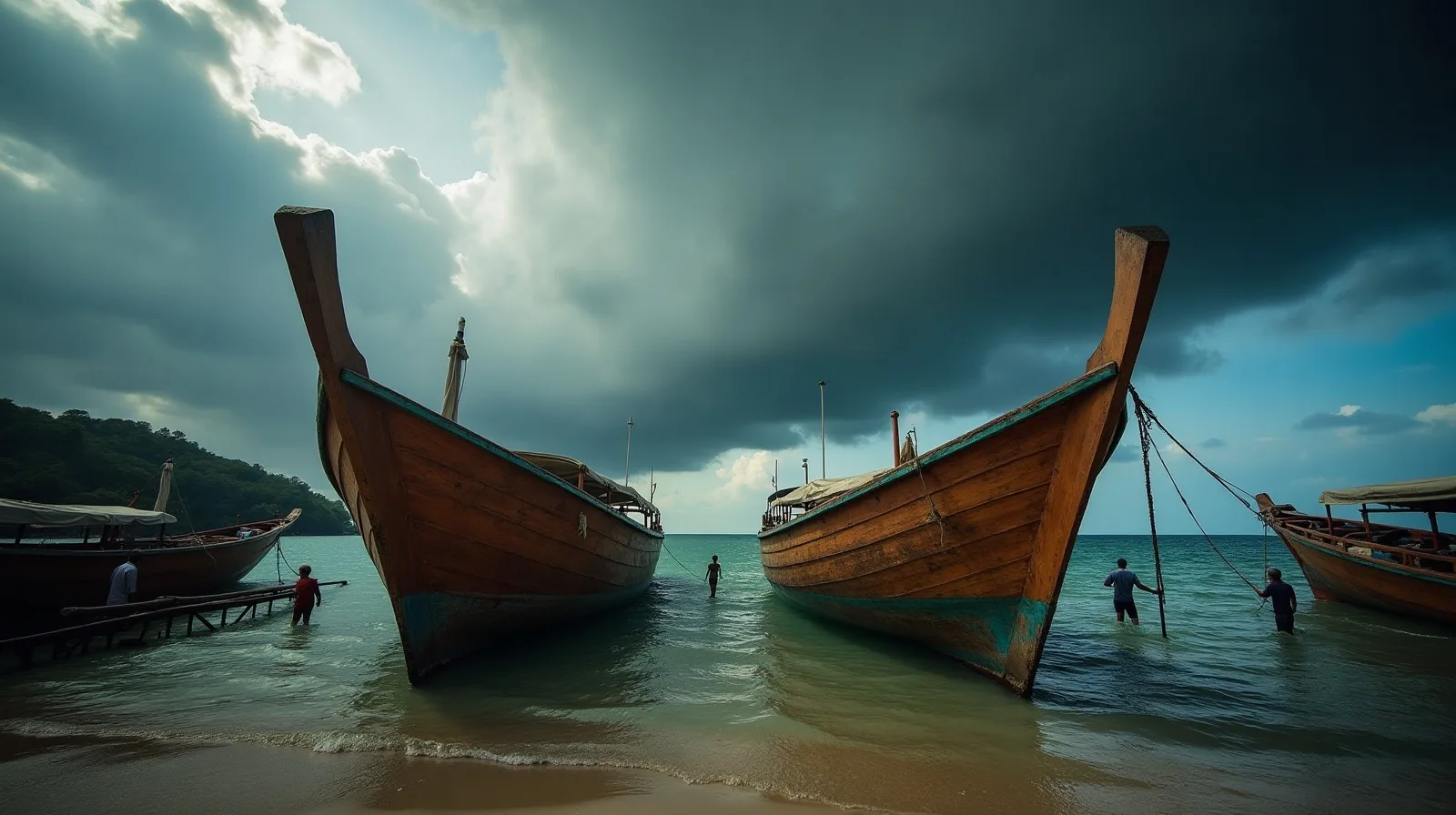
Weather and the Yard Calendar: Building Around Sulawesi’s Seasons
The build calendar of a Bulukumba yard is written by the sky. South Sulawesi’s dry season — roughly May through October under the east monsoon — is the coast’s high-productivity window for planking, caulking, and finishing, while the wet months from about November to April slow exterior work, complicate timber logistics, and push launchings toward the calmer part of the year. A realistic phinisi schedule is therefore not a straight line of months but a spiral around the seasons, and clients who understand the rhythm read their build reports far more accurately.
Two Monsoons, One Working Beach
Bulukumba’s weather runs on the monsoon pair that governs the whole archipelago. The east monsoon brings the dry season — reliable working days, low humidity by tropical standards, and the steady onshore afternoons that make beach work pleasant. The west monsoon brings the rains: squalls that stop exterior painting mid-coat, downpours that soak open hulls, and rougher seas along exposed stretches of coast. The yards never actually stop — a roofed hull interior, joinery shops, and the forge all keep working — but the tempo visibly changes. Any visit plan should account for it, as we note in our client logistics guide.
What Each Season Is Good For
Experienced builders sequence a hull so that weather-sensitive stages land in the right months. Caulking and paying seams want dry timber and dry air; exterior finishing wants rain-free days; and the long push of planking simply goes faster when the crew is not clearing tarpaulins twice a day. The wet season, in turn, is respectable for interior fit-out, systems installation, spar and rigging work under cover, and the patient tasks — timber continues its slow air-drying regardless, a process we explain in seasoning timber the Bulukumba way. A master builder’s real skill is holding this seasonal jigsaw in his head a year in advance, which is one reason published timelines are ranges, not dates — see our keel-to-launch timeline.
Timber logistics ride the same calendar. The ironwood and teak that feed the yards travel by road and sea from other parts of Sulawesi and beyond, and the wet months slow both: upcountry tracks soften, inter-island shipping schedules stretch, and a timber package promised for January may sensibly arrive in March. Experienced yards order early and stack deep before the rains — one more reason the first payment tranche of a build is dominated by timber, and one more question a prospective client should ask when comparing yards: how much seasoned stock is already on the ground?
Launchings, Tides, and Delivery Windows
The calendar’s fixed stars are the spring tides. A beach launch needs high water under the hull, so launch dates lock to the tide tables and, preferably, to the gentler sea states of the dry season. After launching, the new vessel faces a delivery passage — commonly westward to the charter grounds of Komodo — and prudent owners time that passage for favourable weather as well. A hull completed at the wrong end of the wet season may sensibly wait some weeks afloat, finishing fit-out at anchor, before sailing. Operators receiving vessels into service, including the fleet of our sister brand Komodo Luxury’s construction programme, plan handovers around exactly these windows so a boat arrives ready for its first season, not battered by its delivery.
Reading a Build Report Like a Local
Once you hold the seasonal map, schedule updates stop being mysterious. “Planking slowed in February” is not an excuse; it is the west monsoon doing what it does. Conversely, a yard promising full-speed exterior work through the rains deserves a sceptical question. In managed builds we set milestone forecasts against the seasons from the outset and verify them with monthly documentation, so weather surfaces as planned variance rather than surprise — the reporting approach described on our custom construction page. Visits, too, are best planned seasonally: the dry months show you a beach at full tempo, and our Tana Beru yard profile covers the best viewing periods.
Climate is shifting the old certainties at the margins — wet seasons arriving late, dry spells breaking early — and the yards adapt the way they always have, by reading the sky ahead of the calendar. For planning purposes the monsoon frame above still holds; just treat month boundaries as soft and let the build states, not the dates, drive your decisions.
When is the best time to visit the yards?
May through October, in the dry season, when every yard is at full exterior tempo and the coast is at its best. Ceremony days — keel layings and launchings — cluster in the same window, so a well-timed visit can catch one.
Does the wet season stop construction?
No — it redirects it. Interior, systems, joinery, and covered work continue; exterior planking, caulking, and finishing slow or pause around the squalls. A twelve-month build simply breathes with the seasons.
Can a launch happen in the wet season?
It can if the tides and a calm spell align, but yards prefer not to plan one. The pull to the sea involves hundreds of people and days of preparation; nobody wants that under a west-monsoon sky.
Should weather buffers be in my contract?
Yes — as honest scheduling rather than padding. We write milestone forecasts in ranges keyed to the season in which each stage will fall, which keeps both sides honest and payments aligned to reality. Details are in our FAQ.
Planning a build or a visit around the seasons? Message us on WhatsApp at +62 811-3941-4563 or write to bd@juaraholding.com and we will map your project against the monsoon calendar.