
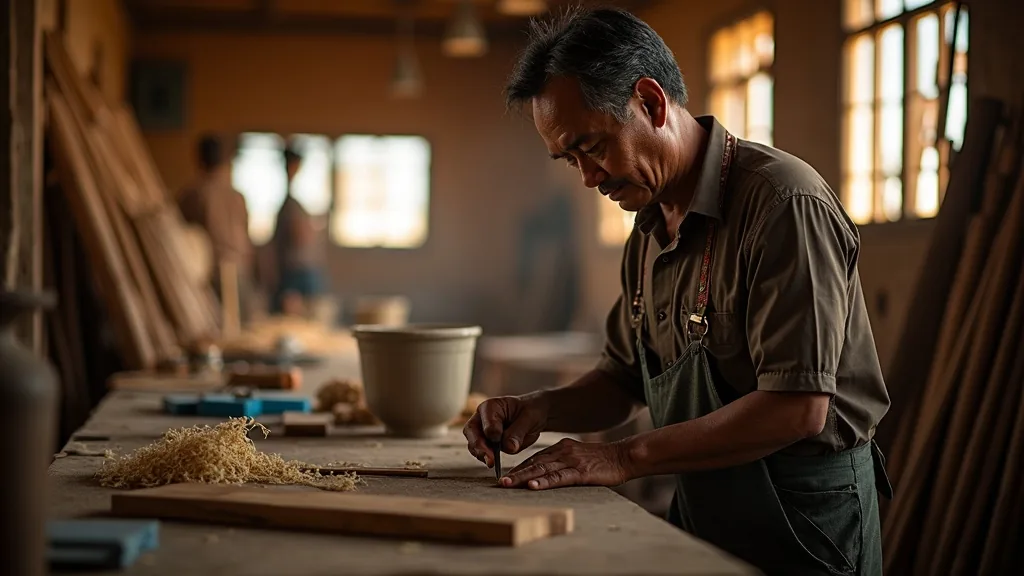
Panrita Lopi: Bulukumba’s Master Shipbuilder
The role of the master shipbuilder panrita lopi in Bulukumba phinisi projects is the single clearest signal a buyer can look for when judging whether a shipyard truly builds traditional phinisi, or simply sells the name. In Tanjung Bira and Tana Beru, South Sulawesi, the panrita lopi is the hereditary master craftsman who designs each hull by eye alone, without blueprints, and then leads the entire build crew from keel-laying through to launch. As of 2026, no vessel built in Bulukumba earns the right to be called an authentic phinisi unless a recognized panrita lopi has directed it from the first plank to the final coat of varnish.
What Is the Role of the Master Shipbuilder Panrita Lopi in Bulukumba Phinisi Projects?
Panrita lopi translates roughly as “boat expert” in the Konjo language of the Bugis-Makassar people, and the title is not awarded by any school or certificate. It is earned over decades, usually passed down within a family or a small circle of apprentices who spend years working the wood before they are trusted to lead a build on their own. On a working level, the role of panrita lopi in Bulukumba phinisi projects covers three responsibilities at once: chief designer, master carpenter, and crew leader.
- Chief designer — the panrita lopi determines the hull’s proportions, curvature, and keel line using measurement-by-eye methods refined over generations, rather than technical drawings.
- Master carpenter — every major structural decision, from timber selection to plank fitting, is made or approved by the panrita lopi personally.
- Crew leader — a Bulukumba build typically involves a dozen or more shipwrights working timber by hand; the panrita lopi assigns tasks, checks progress daily, and is the final authority on any change to the plan.
This is why the panrita lopi’s role in Bulukumba phinisi projects is often described locally as closer to a ship’s architect and site foreman combined than to a single tradesman. Buyers commissioning a custom build should always ask who the panrita lopi on their project is, how many vessels that person has led, and whether they will remain on site for the full build — not just the keel-laying ceremony.
Why Is Bulukumba the Heart of Traditional Phinisi Shipbuilding?
Bulukumba Regency, and specifically the coastal villages of Tanjung Bira and Tana Beru, has built wooden schooners for generations as the ancestral home of the Konjo shipbuilding community. In 2017, UNESCO inscribed the “Art of Boatbuilding in South Sulawesi” on its Representative List of the Intangible Cultural Heritage of Humanity, formally recognizing the phinisi tradition centered in this region. That recognition did not create the skill — it documented a practice that Konjo builders in Bulukumba had already been refining for generations, with the panrita lopi as its living custodian.
Today, Bulukumba remains the primary source for wooden phinisi hulls used across Indonesia’s liveaboard and yacht charter industry. A large share of the wooden charter vessels cruising Komodo National Park were built on these same beaches, launched by traditional sideways-slide into the water, and later fitted out with modern engines, navigation, and interiors elsewhere. For a deeper look at how the Bira and Tana Beru yards operate day to day, see our profile of phinisi yacht builders in Bira and Tana Beru.
How Does a Panrita Lopi Design a Hull Without Blueprints?
The most distinctive part of the panrita lopi’s craft is measurement-by-eye design, known locally as a build method passed through observation and memory rather than paper plans. Instead of starting from a technical drawing, the panrita lopi begins with the keel — traditionally cut from a single length of quality timber — and builds outward, judging curvature, symmetry, and balance visually against decades of accumulated experience. Adjustments are made in real time as the hull takes shape, which is part of why an experienced panrita lopi is irreplaceable on a serious build: there is no drawing to fall back on if the person who holds the design in their head steps away.
Modern commissioning work in Bulukumba increasingly pairs this traditional eye with basic naval architecture input for stability calculations and engine specification, particularly on larger charter and expedition vessels. This is where a builder with international project management experience — coordinating between the panrita lopi’s traditional authority and the technical requirements of a modern liveaboard — makes a measurable difference in the finished vessel’s safety and comfort. Our guide to the custom phinisi yacht construction process walks through how these two disciplines are brought together stage by stage.
Timber Selection Under the Panrita Lopi’s Authority
Wood choice is one of the panrita lopi’s most consequential calls. Ironwood (locally called bitti or ulin) is prized for keels and structural members for its density and resistance to marine borers, while teak is commonly used for decking, interior joinery, and finish work due to its stability and weathering characteristics. Sourcing legal, properly seasoned timber in the required lengths has become harder over the years as old-growth stock has thinned, and an experienced panrita lopi’s judgment on which timber is fit for a structural role — versus which should be reserved for lighter use — is a skill buyers cannot verify themselves without being on site.
What Does the Build Timeline and Price Look Like for a Custom Phinisi?
A traditionally built phinisi in Bulukumba typically takes between 12 and 24 months from keel-laying to sea trials, depending on hull length, wood availability, and the scope of interior fit-out. Larger charter or expedition vessels with extensive cabin work and mechanical systems sit toward the longer end of that range.
| Approximate hull length | Typical build timeline | Indicative price band* |
|---|---|---|
| 20–25 meters | 12–15 months | Lower end of the custom-build range |
| 25–35 meters | 15–20 months | Mid-range, scales with interior specification |
| 35 meters and above | 18–24 months | Upper range, driven by size and fit-out level |
*Prices are indicative only and vary with timber market conditions, hull size, engine and equipment specification, interior finish level, and current import or export requirements at the time of build. We do not quote fixed prices or delivery dates without a proper specification review, and we recommend treating any number you see online — including here — as a starting point for discussion rather than a binding figure. Request a written, project-specific quote via WhatsApp before making any commitment.
How Are Bulukumba-Built Phinisi Delivered to Bali or Labuan Bajo?
Once sea trials are complete, a newly built phinisi typically sails under its own power (or is towed, depending on engine commissioning status) from Bulukumba’s coast to its home port. Two destinations dominate: Labuan Bajo, the gateway to Komodo National Park and the primary base for Indonesia’s liveaboard charter fleet, and Bali, where many owners prefer to berth for provisioning, crew logistics, and guest embarkation. Owners bringing a new vessel into Bali waters commonly choose to dock at Kura Kura Marina in Bali, part of the same JHG network, for haul-out, final fit-out work, and ongoing berthing before the vessel begins charter operations or repositions to Labuan Bajo.
Delivery logistics — crew, fuel stops, weather windows, and any final registration or flagging steps — should be planned alongside the panrita lopi and the build supervisor well before launch, not treated as an afterthought once the hull is finished.
Commissioning a Custom Phinisi With JHG
Commissioning a phinisi is a multi-year relationship, not a single purchase, and the panrita lopi’s role in Bulukumba phinisi projects only delivers real value when it is paired with disciplined project coordination: clear specification documents, realistic timeline tracking, transparent timber and materials sourcing, and honest communication when conditions on the ground change. That is the part JHG adds around the traditional craft — end-to-end coordination of design intent, budget, materials, and delivery logistics from Bulukumba to Bali or Labuan Bajo, working alongside the panrita lopi and crew rather than around them.
Part of Juara Holding Group — operating from Bali across Indonesia since 2015 — our team can walk you through what a realistic build looks like for your intended use, whether that is a private family yacht or a commercial liveaboard for the Komodo charter market. We do not promise specific regulatory timelines or multi-year cost guarantees, because conditions on the ground do change; what we do promise is straightforward answers and a build plan grounded in how these yards actually operate.
If you are exploring a custom phinisi build and want to understand realistic timelines, indicative budgets, and how a panrita lopi-led build is actually supervised from Bulukumba to delivery, reach out directly. Message us on WhatsApp or email bd@juaraholding.com to start the conversation.