
Apprenticeship in Tana Beru: How a Konjo Shipwright Is Made
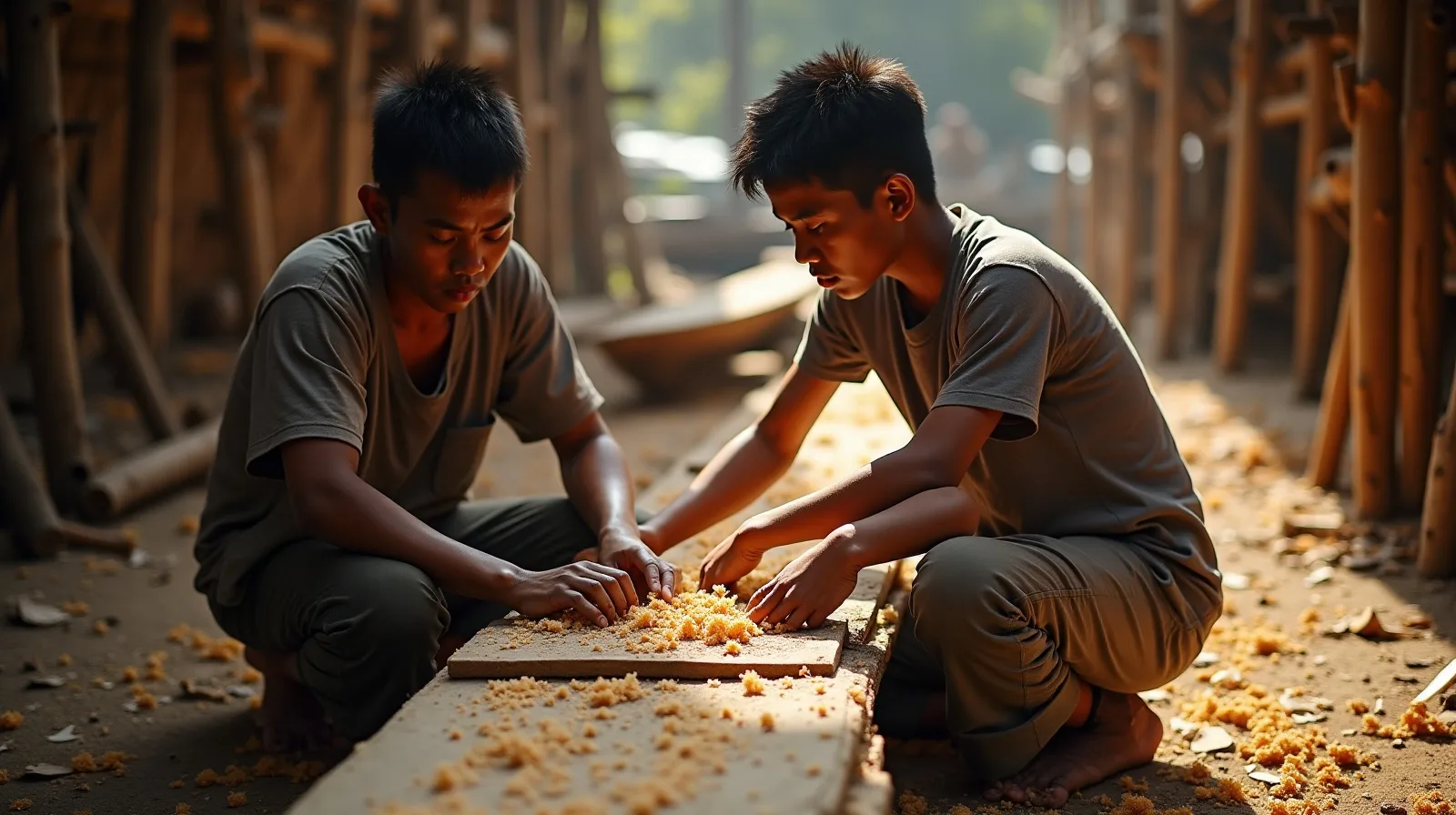
A Konjo shipwright in Tana Beru is made through years of unpaid observation and graded hands-on work inside a family or village crew — not through a trade school. Boys typically begin around the yards in their early teens, progress from fetching and fairing to planking and framing over five to ten years, and only a small minority are ever recognised as a panrita lopi, the master who carries a hull’s geometry in memory. This apprenticeship chain, named in UNESCO’s 2017 inscription of pinisi boatbuilding, is the mechanism that keeps Bulukumba’s boat building alive.
Where the Learning Happens
There is no academy of phinisi construction. The classroom is the working beach: the row of hulls at Tana Beru, the family compounds behind them, and the timber stacks between. UNESCO’s inscription file notes that in the boatbuilding centres of Bulukumba roughly seventy per cent of the population earns its living from work tied to boats and navigation, which means children grow up inside the craft before they ever pick up an adze. By the time a teenager formally joins a crew, he has usually spent years watching planks steamed, dowels driven, and hulls hauled — absorbing sequence and vocabulary the way other children absorb a first language.
The Grades of a Yard Crew
Local practice sorts a crew into recognisable tiers, even if the titles vary from village to village:
- Beginners carry timber, turn grindstones, bail rainwater from open hulls, and learn to sharpen tools — the yard’s unglamorous circulation system.
- Juniors are trusted with repetitive precision work: cutting treenails, boring dowel holes, rough-shaping planks to a scribed line.
- Carpenters (tukang) hang planking, fit frames to the shell, and execute the master’s instructions on their own judgement within a section of the hull.
- Lead hands run a side of the boat or a stage of the build, translating between the master’s intent and the crew’s daily work.
- The panrita lopi holds the design: proportions, timber selection, ritual sequence, and the authority to say a hull is fair. We describe the role fully in our post on the panrita lopi.
Advancement is not scheduled. A man moves up when the crew stops checking his work — a standard harsher and more honest than any certificate.
What Is Actually Being Taught
The technical core of the apprenticeship is the shell-first method that distinguishes boat building in Sulawesi from most Western practice: planks are erected and edge-dowelled into a complete shell before the frames are fitted into it. Learning this means internalising how a two-dimensional plank must twist and curve to land fairly on a three-dimensional hull, without lofting drawings to fall back on. Apprentices learn it plank by plank, correction by correction.
Alongside geometry comes materials judgement — reading ironwood, bitti, and teak for grain, defects, and seasoning, knowledge we codify for clients on our ironwood and teak standards page — and the ritual literacy that accompanies each build stage. A shipwright who cannot participate correctly in a keel-laying or launching ceremony is, in village terms, not yet finished himself.
How Long It Takes — and Who Drops Out
From first paid work to trusted carpenter is commonly five to ten years. The path to master status has no fixed length at all; it requires leading builds under supervision, then leading them alone, then having other families ask for you by name. Many capable carpenters never take that step — the responsibility is heavy, the ritual knowledge is guarded, and modern Sulawesi offers other careers. Yards feel this pressure: motorbikes, mining wages, and city work compete for the same young men. What keeps the chain intact is the order book. As long as international clients commission new hulls, apprenticeship remains a livelihood rather than a museum activity — one reason our parent group deliberately routes construction demand to this coast, alongside the charter and build services of Komodo Luxury’s boat construction division.
What This Means for a Client’s Build
When you commission through us, the crew on your hull is exactly this structure: a named master, his lead hands, and a graded team whose skills we can describe to you honestly. It is why we insist that specifications be written down — the yard’s strength is embodied knowledge, and our role is translating that into documents, milestones, and quality checks an overseas owner can rely on. The process from first enquiry to named crew is set out on our custom phinisi construction page, and the values behind it on our about page.
Can outsiders apprentice in Tana Beru?
Occasionally researchers and boatbuilders from elsewhere in Indonesia or abroad spend seasons working alongside a crew, and the yards are generally hospitable to serious learners. But the full apprenticeship — including ritual transmission — runs through family and village lines, and no short residency substitutes for it.
Are the skills written down anywhere?
Parts have been documented by anthropologists and in the UNESCO nomination file, and modern commissions add naval architecture drawings on top of traditional practice. The core hull-shaping judgement, however, remains person-to-person. That is precisely what the inscription protects: a knowledge system that lives in working shipwrights, not archives.
Does traditional training mean the boats ignore modern standards?
No. Contemporary builds pair the traditional crew with engineering drawings, marine surveyors, and classification or flag requirements as needed. The apprenticeship system supplies the hull craft; the commissioning framework supplies documentation and compliance. Owners get both, and the combination is visible in every vessel the coast delivers.
Is the craft actually endangered?
UNESCO listed pinisi boatbuilding as heritage in need of active safeguarding, and recruitment pressure is real. The most effective safeguard is continuing demand for new hulls built the traditional way — which is what every new commission on this coast provides.
Want to meet the crew who would build your boat before you commit? Message us on WhatsApp at +62 811-3941-4563 or write to bd@juaraholding.com and we will arrange introductions at the yard.