
The Bulukumba Order Book: What the Yards Are Building This Year
The order book of the Bulukumba coast today is dominated by tourism: charter phinisi for the Komodo and Raja Ampat routes, private sailing yachts for foreign owners, and a steady stream of refits as the first generation of liveaboards comes back to the beach for renewal. Traditional work has not vanished — fishing boats and the occasional cargo hull still take shape between the big builds — but the economics of the yards now run on charter demand, and slipway space at Tana Beru and Bira is booked further ahead than at any time in recent memory.
Reading the Beach Like an Order Book
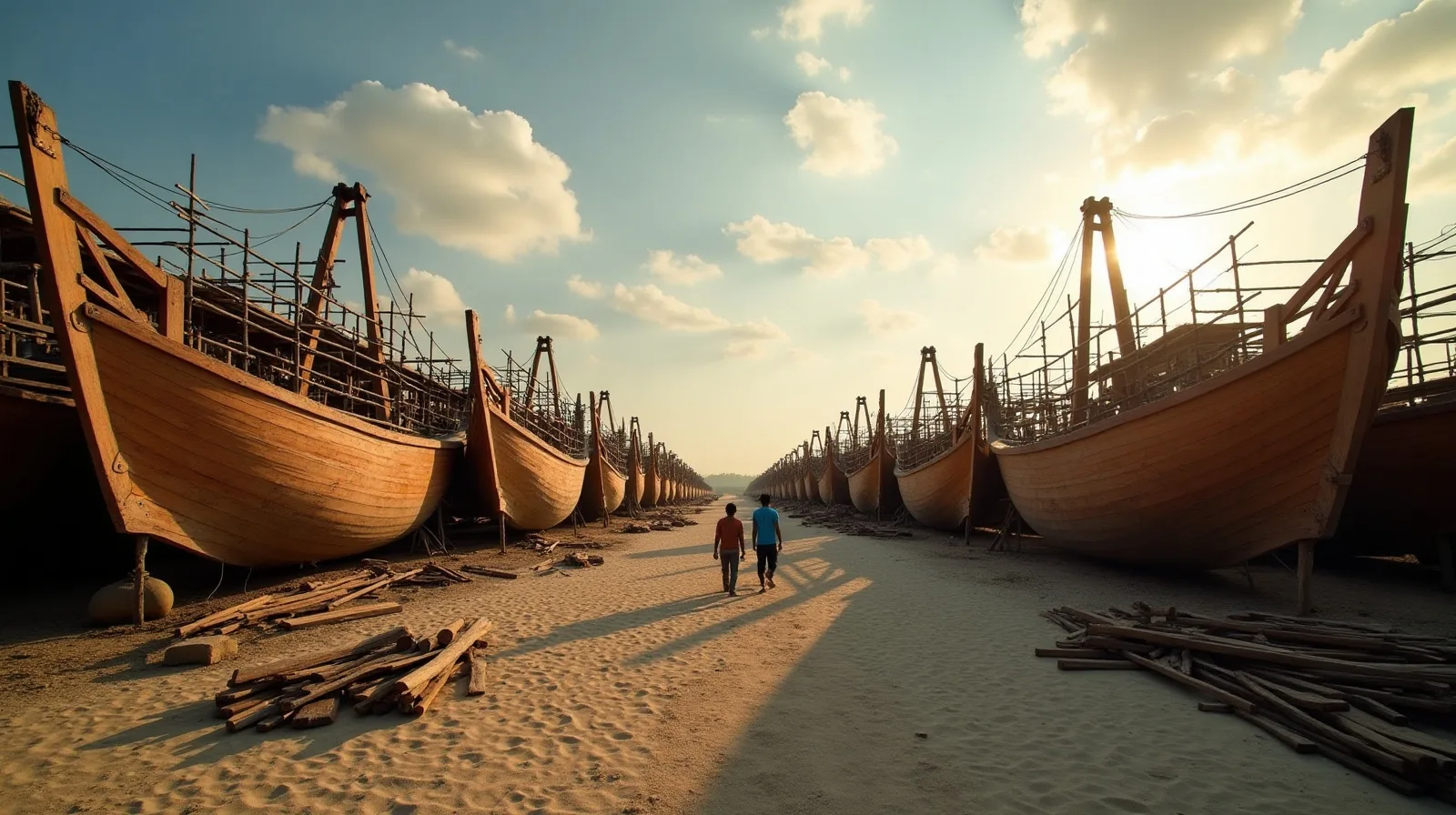
There is no published register of what the yards are building; the beach itself is the ledger. Walk the three kilometres of the Tana Beru waterfront and you can count the coast’s economy in hull silhouettes: broad-beamed charter phinisi with tall topsides for guest cabins, slimmer private yachts, a half-planked fishing boat tucked between them, and hulls up on blocks with their copper stripped — refits in progress. The mix shifts year to year, but the pattern since the late 2010s is consistent: most large hulls on the beach are destined for the charter grounds of eastern Indonesia.
The ratio matters to a prospective client because it tells you where the skilled crews are committed. A yard with two 40-metre charter builds running is a yard whose master carpenters are spoken for; the question to ask is never only “can you build it” but “which crew, starting when”.
What Dominates: Charter Hulls for Komodo and Beyond
The single biggest driver of the order book is the liveaboard economy around Komodo National Park and Raja Ampat. Operators need vessels purpose-shaped for the trade — dive platforms, tender garages, guest cabins with real headroom — and owners increasingly commission new hulls rather than convert old cargo boats, a design distinction we unpack in cargo versus liveaboard construction. Once launched, these vessels sail west to their working grounds, a delivery passage we describe in delivering a new phinisi to Komodo. Many enter fleets serving the routes run by our sister brand Komodo Luxury — the demand side of the very order book this coast is building against.
For anyone planning to enter that market with a vessel of their own, the commercial calculus — build cost against charter yield — is set out on our build a phinisi for charter page.
The Quiet Second Market: Refits and Renewals
The liveaboard boom is now old enough that its first vessels need major work. Hulls launched in the 2010s are returning to Bulukumba for recaulking, plank replacement, engine repowers, and interior renewals — often faster projects than new builds, and valuable to yards because they fill slipway gaps between keel layings. A refit also brings a boat back to the families who built it, which is where institutional memory of every frame and fastening lives. If you own an ageing phinisi, the decision framework is covered in our guide to refit and restoration in Bulukumba.
Refit demand also stabilises the labour force in a way new builds alone cannot. Planking crews surge and rest with the rhythm of big hulls, but recaulking, plank replacement, and interior renewals generate steady, year-round work that keeps mid-career shipwrights on the coast instead of drifting to city wages. For the client, that means the crew that built your boat is far more likely to still be assembled — and current — when your vessel returns for its first major service five or eight years on.
Capacity, Lead Times, and What It Means for You
The practical consequence of a full order book is lead time. Slots for large new builds are typically committed one to two seasons ahead; seasoned timber packages take months to assemble; and the best crews move from launch to keel with little slack. A serious commissioning conversation therefore starts earlier than most buyers expect — securing timber and a crew window before design detail is finalised, the sequencing we manage through our commissioning process. The compensation for patience is real: you are joining a working pipeline whose recent output you can inspect afloat, hull by hull, in our completed phinisi portfolio.
How many hulls are under construction at once?
It varies with the season, but the Tana Beru–Bira strip typically has dozens of vessels in some stage of construction or refit at any time, from village fishing boats to 40-metre-plus charter phinisi. The large-hull count is the number that moves with tourism demand.
Are cargo phinisi still being built?
Occasionally, and mostly motorised working boats rather than the sailing traders of the past. The knowledge survives in the same families now building yachts — which is exactly why modern hulls retain their seakeeping DNA.
How far ahead should I book a build slot?
For a large custom hull, open the conversation twelve months before you want the keel laid. Timber procurement and crew scheduling consume most of that lead; design work runs in parallel rather than in advance.
Can I see what a specific yard is building now?
Yes — the beach is open to respectful visitors, and we arrange guided walks that pair hull viewing with introductions to the building families. Tell us what size and type you have in mind and we will route you to the yards with matching work underway.
Want a current read of the order book before you commit? Message us on WhatsApp at +62 811-3941-4563 or write to bd@juaraholding.com — or reach us through the contact page and we will map available slots against your timeline.