
Main Cost Drivers When Building a Phinisi
The main cost drivers when building a phinisi in Bulukumba, South Sulawesi break down into five buckets: the hull and structural timber, skilled labor, secondary materials and hardware, interior fit-out, and the engine plus mechanical systems. As of 2026, hull timber and labor together usually make up the largest share of a build budget, while interior finishing is the line item most likely to swing a quote up or down depending on whether the owner wants a basic liveaboard or a full luxury yacht interior. Understanding how these buckets interact is the fastest way to read a Bulukumba shipyard quote without guessing.
Bulukumba — specifically the coastal villages of Tanjung Bira and Tana Beru — is where phinisi construction has been passed down through generations of the Konjo boatbuilding community. UNESCO recognized the practice as an Intangible Cultural Heritage of Humanity in 2017, and the same yards that built traditional trading schooners now turn out the liveaboard vessels that run Komodo National Park charters out of Labuan Bajo. That heritage is part of what buyers are paying for, but it does not make the cost structure a mystery. Below is how each bucket actually works.
What Are the Main Cost Drivers When Building a Phinisi in Bulukumba, South Sulawesi?
Every quote from a Bulukumba yard is really an assembly of five decisions, each with its own price sensitivity:
| Cost Bucket | What Drives the Price |
|---|---|
| Hull & structural timber | Boat length/beam, wood species (ironwood vs teak), keel and rib thickness |
| Skilled labor | Size of the Konjo carpentry crew, build speed, complexity of the hull curve |
| Materials & hardware | Masts, rigging, fasteners, caulking, anchor gear, paint systems |
| Interior fit-out | Cabin count, ensuite bathrooms, AC, marine electrical, custom joinery |
| Engine & mechanical | Engine brand/horsepower, generators, navigation electronics, fuel tankage |
The figures a yard gives you are indicative planning ranges, not fixed contracts — actual cost depends on current timber and steel prices, the specific yard’s capacity at the time you sign, and how detailed your specification is. For a fuller cost breakdown with size-based ranges, see our phinisi yacht price guide.
Hull and Structural Timber
This is usually the single biggest line item, because it is set almost entirely by physics rather than taste. A longer, wider hull needs proportionally more keel timber, more ribs, and more planking — and the relationship is not linear, since a bigger boat also needs thicker structural members to stay sound. Bulukumba builders traditionally use ironwood (locally called besi or bitti) for the keel and lower frames because of its natural resistance to marine borers and rot, then switch to teak for planking, decking, and the superstructure where a lighter, more workable wood makes sense. Ironwood in particular has become harder to source at scale in recent years, so keel timber pricing is one of the more volatile inputs in a Bulukumba quote — buyers commissioning a larger vessel should expect this bucket to move with timber market conditions, not stay fixed from the day of an initial estimate.
Skilled Labor: The Konjo Boatbuilding Crews
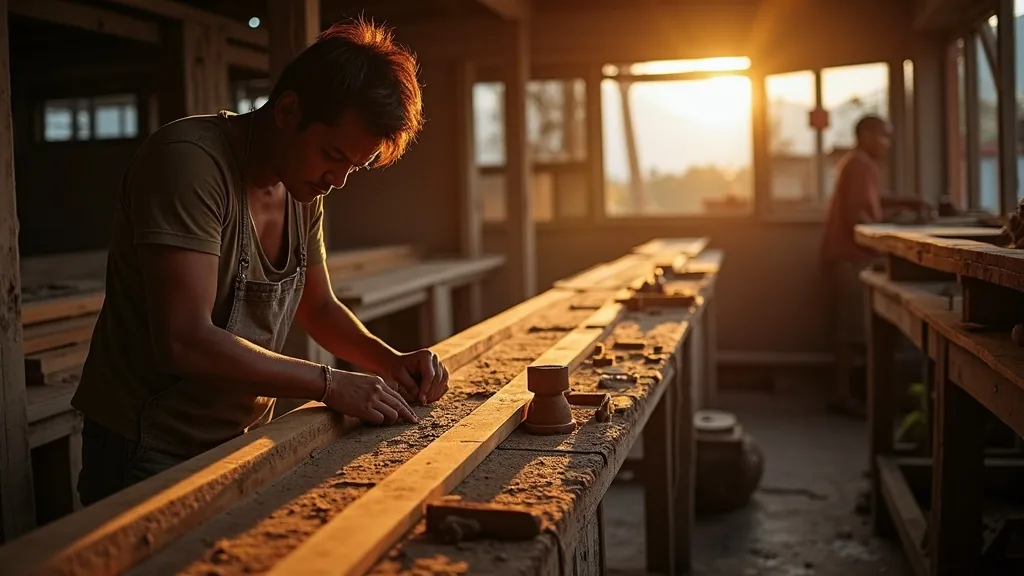
Phinisi hulls are still largely built by eye and hand tool rather than to a CNC-cut frame, which is part of what UNESCO’s 2017 recognition was protecting. That means labor cost is a function of crew size and build duration, not a fixed hourly rate you can shop around easily. A larger vessel needs a bigger crew working in parallel on planking, ribs, and deck structure, and a compressed timeline means paying for more hands working simultaneously rather than fewer hands working longer. This is one of the main cost drivers when building a phinisi in Bulukumba that buyers underestimate — rushing a build to meet a charter season deadline almost always adds to the labor line, because the yard has to bring in additional craftsmen rather than simply working the existing crew overtime.
Materials and Hardware Beyond the Hull
Once the structural timber is accounted for, a second tier of materials adds up quickly: masts and rigging for vessels built with a genuine sailing rig, traditional wooden pegs and modern fasteners used together, caulking and marine-grade paint systems, anchor and chain, and deck hardware. None of these individually rivals the hull cost, but together they can represent a meaningful share of the total, especially on a vessel that keeps functional sails rather than using masts purely for aesthetics. Buyers who want a phinisi that can genuinely sail, not just motor with decorative masts, should expect this bucket to be larger.
Interior Fit-Out: The Line Item With the Widest Range
If hull timber is the most predictable cost driver, interior fit-out is the least. A basic charter-standard interior — simple cabins, shared bathrooms, functional wiring — costs far less than a full luxury interior with ensuite bathrooms per cabin, air conditioning throughout, custom teak joinery, imported fixtures, and entertainment systems. This is the bucket where two phinisi of identical hull length can end up with radically different total build costs, because interior specification is almost entirely a matter of owner choice rather than a fixed requirement of the vessel. For anyone comparing quotes from different Bulukumba yards, it is worth asking exactly what interior standard is included before assuming the numbers are comparable — a lower quote may simply reflect a lower interior spec, not a cheaper yard.
Engine, Generators, and Mechanical Systems
Main engines, generators, gearboxes, propeller shafts, fuel tanks, and navigation electronics (GPS, AIS, radar) usually make up the largest single purchased-component cost after the hull itself. Because most marine engines suitable for a phinisi-sized vessel are imported rather than locally manufactured, this bucket is also the one most exposed to currency movement and import logistics, which is why engine specification should be locked in early rather than left as a placeholder in a rough quote. Horsepower requirements scale with vessel size and intended use — a liveaboard doing multi-day Komodo routes has different engine and generator needs than a day-charter boat, which affects both upfront cost and long-term fuel consumption.
How Does Build Timeline Affect Total Cost?
A Bulukumba phinisi typically takes 12 to 24 months to build depending on size and specification, and timeline interacts with almost every cost bucket above. A longer, unhurried build lets a fixed-size crew work through the hull, interior, and mechanical installation in sequence, which is usually the more cost-efficient path. Compressing the schedule — for example to have a vessel ready for a specific Komodo charter season — generally means paying for a larger simultaneous crew and sometimes for materials sourced faster (and therefore at a premium) rather than at the most economical price point. Buyers working backward from a delivery date should build in a labor and materials contingency rather than assuming a rushed timeline costs the same as a standard one.
What About Delivery to Bali or Labuan Bajo?
Delivery is a real cost line that is easy to leave out of an early budget. A phinisi built in Bulukumba destined for a Labuan Bajo charter operation or a Bali berth needs a delivery crew, fuel, insurance for the delivery voyage, and time — none of which is part of the build contract itself unless it is specified up front. Owners planning to base their vessel in Bali often coordinate berthing separately with a marina; within the Juara Holding Group network, Kura Kura Marina in Bali is the sister facility many phinisi owners use once their vessel completes its delivery voyage from South Sulawesi.
Turning Cost Buckets Into an Actual Build Plan
Knowing the five main cost drivers when building a phinisi in Bulukumba, South Sulawesi is only useful if it translates into a specification you can actually quote against. Juara Holding Group has been operating from Bali across Indonesia since 2015, and works end-to-end with Bulukumba yards on behalf of owners — turning a rough idea (“a liveaboard for Komodo charter,” “a private family cruiser”) into a locked specification across hull size, interior standard, and engine package before construction starts, then managing the build and delivery to Bali or Labuan Bajo. If you are ready to move from cost buckets to a real specification and timeline, our custom phinisi yacht construction service walks through commissioning step by step.
All figures discussed here are indicative planning guidance based on typical Bulukumba build structures, not a fixed quote — actual cost depends on current material prices, vessel specification, and yard capacity at the time of contracting. Import duties, registration, and flagging requirements should be confirmed with the relevant authorities at the time of your build, since these can change and are outside the scope of a shipyard quote.
To get a real cost estimate against your own specification — hull size, interior standard, engine package, and delivery destination — reach out directly. Message us on WhatsApp at +62 811-3941-4563 or email bd@juaraholding.com, and we will walk through the main cost drivers against your actual build brief rather than a generic estimate.