
Quality Assurance on a Bulukumba Shipyard Project
If you’re asking how to manage quality assurance and inspections on a Bulukumba beach shipyard project, the short answer is this: a written survey schedule tied to hull milestones, an independent naval architect who inspects and signs off at defined stages, and regular photo and video reporting for buyers who are thousands of kilometers away. This is the framework Juara Holding Group runs alongside the traditional Konjo builders of Tanjung Bira and Tana Beru on every custom phinisi commission, and it is what turns an open-beach build into a process an overseas owner can actually trust. Here is how it works, stage by stage, as of 2026.
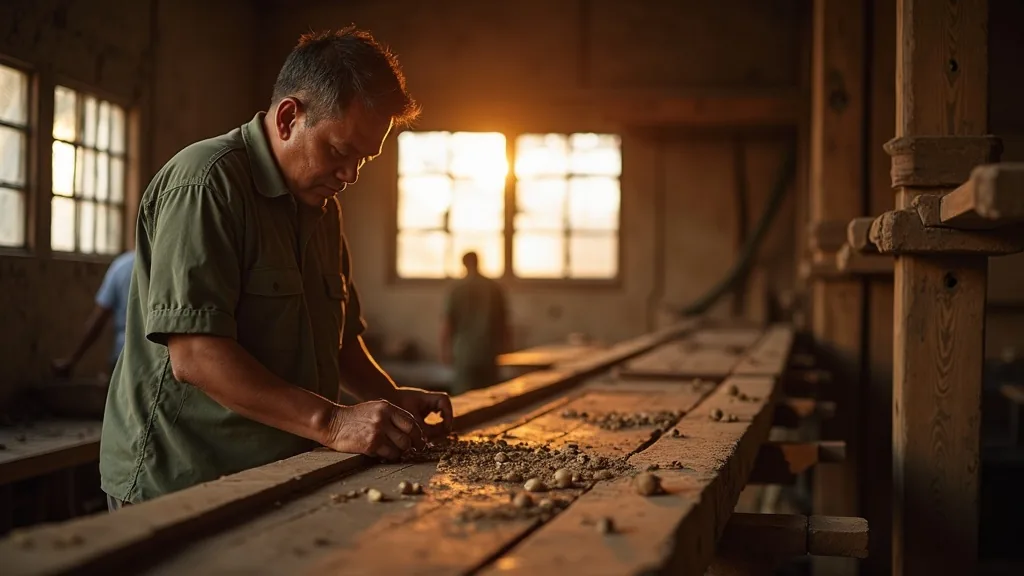
Bulukumba’s shipyards are not enclosed factories. Keels are laid directly on the sand, hulls are shaped by eye and generations of inherited skill, and the same beach that has produced trading schooners for a century now produces liveaboards bound for Komodo, Raja Ampat, and private owners worldwide. That heritage is exactly why quality assurance has to be deliberate rather than assumed — a beach yard has no walls to hide behind, but no automatic paper trail unless someone builds one in.
How Do You Manage Quality Assurance and Inspections on a Bulukumba Beach Shipyard Project?
In practice, managing quality assurance and inspections on a Bulukumba beach shipyard project comes down to three interlocking habits: checkpoint surveys at every structural milestone, a third party who is not paid by the builder reviewing the hull and mechanical work, and a documentation trail — photos, video, written notes — that the buyer can review from anywhere. None of these replace the craftsmanship of the Konjo builders; they simply make that craftsmanship verifiable to someone who isn’t standing on the beach watching it happen.
Survey checkpoints across the build
A serious build schedule breaks the vessel into checkpoints rather than waiting for a single inspection at the end. Typical checkpoints include:
- Keel and frame laying — timber selection (usually ironwood, known locally as bengkirai or ulin, for the keel and structural members, with teak commonly used for decking and interior joinery), squareness of the frames, and initial dimensions against the agreed plan.
- Planking and structural fastening — plank fit, fastening method, and the traditional joinery techniques that give a phinisi hull its longitudinal strength.
- Deck and superstructure framing — deck camber, bulkhead placement, and structural provisions for engine beds, tanks, and rigging loads.
- Mechanical and systems installation — engine alignment, electrical runs, plumbing, and tankage, checked against the spec sheet rather than against verbal assumptions.
- Interior fit-out — joinery, cabins, and finishing, reviewed against the agreed layout drawings.
- Pre-delivery sea trial — engine performance, steering, stability under way, and a final punch-list walkthrough before handover.
Each checkpoint is documented in writing, with sign-off dates, so that quality assurance and inspections on a Bulukumba beach shipyard project produce a paper trail rather than a memory.
Independent naval-architect inspection
The single biggest risk in any overseas commission is relying only on the builder’s own word for structural soundness. Bringing in a naval architect or marine surveyor who is engaged directly by the buyer — not subcontracted through the yard — removes that conflict of interest. Their role typically covers scantlings and structural dimensions against the design, hull fairness and fastening quality, stability and displacement checks relevant to the vessel’s intended use, and a written inspection report at agreed milestones, not just a final rubber stamp. For buyers who want an added layer of assurance, this independent report can also be shared with insurers, flag-state surveyors, or class-adjacent bodies later in the vessel’s life, which is far easier to arrange when the inspection history already exists in writing.
Photo and video progress reporting for remote buyers
Most buyers commissioning a phinisi are not based in South Sulawesi, and many are not based in Indonesia at all. Reducing the anxiety of an overseas build means giving them eyes on the yard without requiring a flight to Bulukumba every month. A properly run project provides dated photo sets at each milestone, matched against the checkpoint list above; short video walkthroughs of the hull, deck, and interior at each major stage; scheduled video calls with the project coordinator at key transitions (keel-laying, planking complete, engine installed, sea trial); and a running written log the buyer can check instead of relying on memory or scattered messages. When you combine checkpoint surveys, an independent naval architect, and this kind of visual reporting, you get a workable answer to how to manage quality assurance and inspections on a Bulukumba beach shipyard project without ever needing to be there in person for most of the build.
Why Is Bulukumba Still the Center of Traditional Phinisi Building?
Bulukumba Regency, and specifically the coastal areas of Tanjung Bira and Tana Beru, has been the heart of phinisi construction for generations, carried on by the Konjo people using knowledge passed down through families of builders rather than formal naval architecture schools. UNESCO recognized phinisi boatbuilding as an Intangible Cultural Heritage of Humanity in 2017, formally acknowledging what the region’s shipwrights had already proven over decades: that a wooden sailing vessel of real seagoing scale can be built almost entirely by eye, by hand, and on an open beach. That same tradition is why a large share of the liveaboard fleet currently operating Komodo National Park charters — and a growing number of private phinisi yachts — trace their hull back to a Bulukumba beach yard.
What Does a Typical Build Timeline and Price Range Look Like?
Build time and cost vary widely depending on size, timber specification, engine and systems package, and interior finish level, so any figure quoted before a design and spec review should be treated as indicative only, not a fixed quote. As a general guide for planning purposes as of 2026:
| Vessel size (approx.) | Typical build timeline | Main cost drivers |
|---|---|---|
| Under 20 meters | 12–16 months | Timber grade, engine choice, basic vs full interior fit-out |
| 20–30 meters | 16–20 months | Cabin count, systems complexity, deck equipment |
| Over 30 meters | 20–24+ months | Custom naval architecture, luxury finish, generator/AC capacity |
These ranges assume normal weather windows and timber availability; they are not contractual commitments, and any serious builder should walk you through a project-specific schedule before you sign anything. For a closer look at how the commissioning process itself is structured from first inquiry to signed agreement, see commissioning a custom phinisi boat.
How Does This Reduce the Anxiety of Commissioning From Overseas?
Most of the hesitation around building a wooden vessel on an Indonesian beach — rather than in a shipyard with a website and a sales office — comes from not being able to see what’s happening. The combination described above (staged surveys, an independent architect, and photo/video reporting) is designed specifically to close that gap. It gives a remote buyer the same three things they’d expect from any serious build contract anywhere in the world: a schedule they can check progress against, a third-party opinion they didn’t have to ask for, and a visual record they can review at 2am in their own time zone if they want to. If you’re earlier in the process and still comparing what a full construction program looks like end to end, custom phinisi yacht construction walks through the build stages in more detail, and the same commissioning page above covers how quotes, contracts, and deposits are typically structured.
What Happens After the Build: Delivery to Bali or Labuan Bajo?
Once the sea trial is complete and the buyer or their representative signs off, the vessel is delivered under its own power or escorted to its home port — most commonly Bali or Labuan Bajo, given how much of the charter and private-yacht market operates from those two hubs. Delivery voyages are planned around weather windows and crewed by people familiar with the route rather than rushed to a fixed date. Owners arriving into Bali often connect through Kurakura Marina, part of the same JHG ecosystem, for berthing, provisioning, and ongoing maintenance support once the vessel is in home waters. Domestic registration, flagging, and any import-related paperwork depend on the vessel’s ownership structure and intended use, and current regulations should always be confirmed directly with the relevant Indonesian maritime authorities at the time of delivery rather than assumed from general guidance.
Getting Started
Whether you’re at the concept stage or ready to discuss a formal spec sheet, the same quality-assurance framework applies from day one: checkpoint surveys, an independent naval architect, and photo and video reporting throughout. That combination is the practical answer to how to manage quality assurance and inspections on a Bulukumba beach shipyard project, and it’s the standard we apply on every phinisi build we coordinate out of Bulukumba.
Juara Holding Group has operated from Bali across Indonesia since 2015, and coordinates phinisi construction, commissioning, and delivery end to end — including the marina and post-delivery support side through Kurakura Marina in Bali.
To discuss a build, request a spec sheet, or ask about current shipyard availability, reach our team directly on WhatsApp at +62 811-3941-4563 or by email at bd@juaraholding.com.