
Why UNESCO Status Changed Nothing — and Everything — in Bulukumba
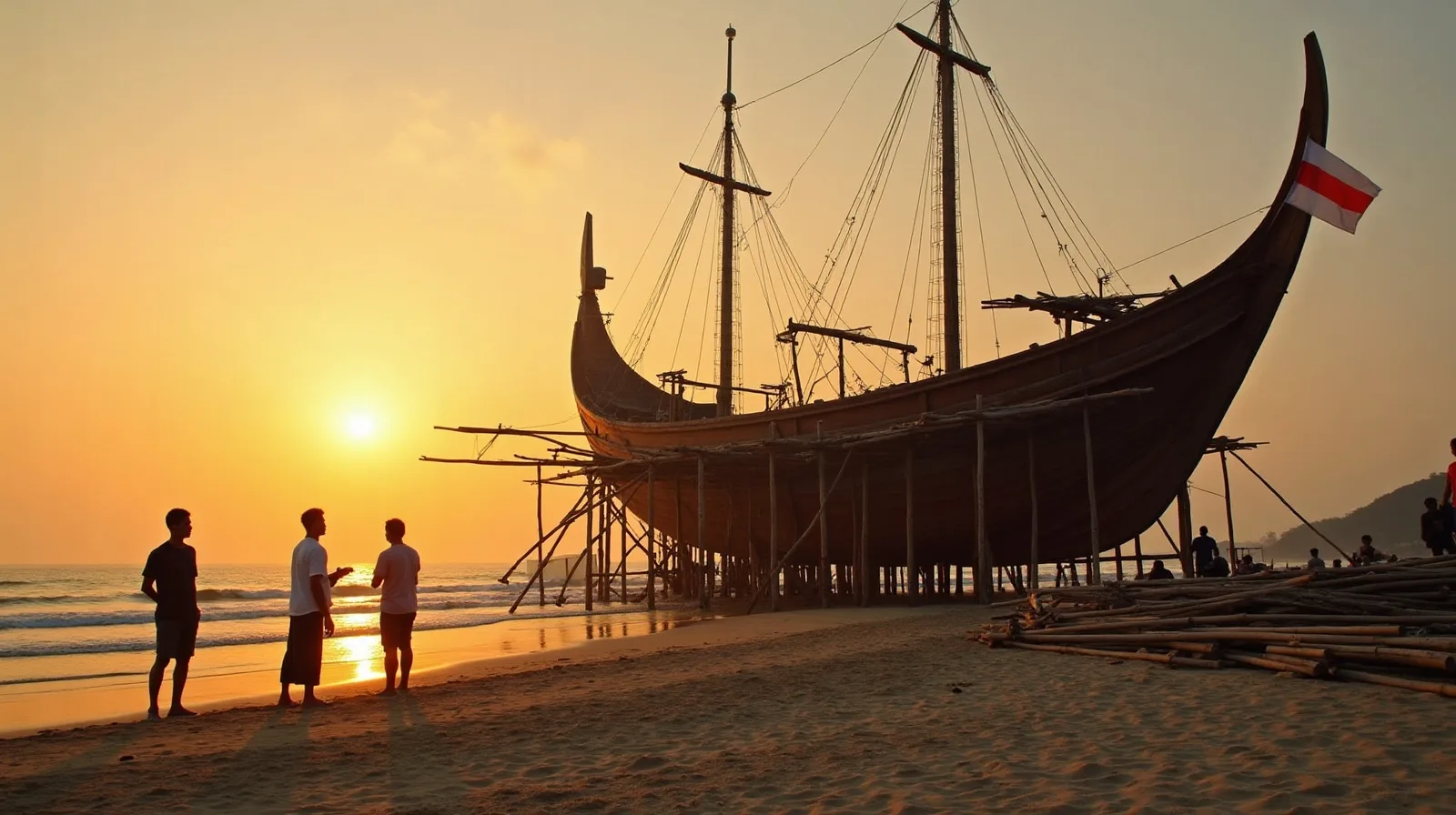
In December 2017, UNESCO inscribed “Pinisi: art of boatbuilding in South Sulawesi” on the Representative List of the Intangible Cultural Heritage of Humanity. On the beaches of Tana Beru and Bira, the honour changed nothing about how a hull is built — same families, same adzes, same rituals — and yet it changed nearly everything around the craft: global visibility, buyer confidence, cultural pride, and the willingness of a young generation to stay in the yards. For a prospective owner, the inscription is best understood as the world’s formal recognition of a provenance the coast already had.
What UNESCO Actually Recognised
The inscription does not certify boats; it recognises a living body of knowledge. The listed element is the art of boatbuilding itself — the construction techniques, the communal labour, the ceremonies, and the transmission of skill within the Konjo building communities of Bulukumba. UNESCO’s intangible heritage framework exists to safeguard practices carried by people, which is exactly right for a craft whose blueprints are memories and whose quality system is lineage, as we describe in our story of the yard. No plaque hangs on the beach. The recognition lives where the craft does: in the builders.
What Changed Nothing
Walk the sand today and 2017 is invisible. Keels are still laid on auspicious days; planks are still shaped by eye and adze; hulls still go to the sea on ropes and rollers pulled by the village. There was no flood of subsidies that industrialised the yards, no heritage bureaucracy standing between builder and client, no museum-ification of a working coast. The families guarded the thing UNESCO actually valued — the unbroken practice — by simply continuing it. Anyone can verify this with their own eyes on a walking visit, which we describe in our guide to visiting Tana Beru.
What Changed Everything
The quiet revolution was reputational. International buyers who once needed convincing that a beach-built wooden ship could be a serious vessel now arrive already persuaded — the phrase “UNESCO-recognised craft” does in one line what pages of explanation used to do. Domestic pride followed: national attention, documentary crews, school visits, and a measurable lift in how the builders’ own children value the trade. That matters more than any marketing effect, because the craft’s single point of failure has always been generational transmission. The deeper history of how recognition interacted with the charter boom is analysed in our earlier essay on the UNESCO impact — and the demand side is visible in today’s order book of charter and expedition hulls, many destined for fleets like our sister brand Komodo Luxury.
There is also a subtler shift worth naming: the coast now understands itself as a custodian, not merely a workplace. Builders speak of the inscription in the first person plural — it is our listing, held by the villages collectively rather than by any yard or agency. That collective ownership has quietly raised the social cost of bad work. A flawed hull was always a family embarrassment; after 2017 it became a stain on something the whole coast now formally represents to the world. Buyers feel the effect without ever seeing the mechanism: the standard-bearer is no longer just a lineage, it is a heritage with an audience.
What It Means When You Commission
Practically, the inscription gives an owner three things. Provenance: your vessel issues from a named, internationally recognised tradition — a fact with real weight in charter marketing and eventual resale, as the hulls in our completed portfolio demonstrate. Accountability: heritage status has sharpened documentation of the craft, from timber sourcing to build ceremonies, aligning neatly with the standards we already apply to materials in our timber standards. And responsibility: buying a phinisi is now, explicitly, participation in safeguarding a listed human heritage — your commission is the mechanism by which the knowledge pays its practitioners and persuades the next generation to pick up the adze.
Visitors feel the change most concretely in how the coast receives them. Yard hosts are practised now at explaining the craft to outsiders; village youth guide walking tours in confident English; and the launching crowds include travellers who came specifically because a UNESCO listing told them this beach mattered. The craft absorbed the audience without performing for it — the hulls on the sand are all still real orders for real owners.
Does UNESCO certify individual boats or yards?
No. The inscription recognises the boatbuilding tradition of the South Sulawesi communities as intangible heritage. No yard holds a UNESCO licence, and any marketing implying a “UNESCO-certified boat” is overreach — the honour belongs to the craft and its people.
Did the inscription raise build standards?
Indirectly. Standards were always set by lineage reputation, but the attention that followed 2017 increased documentation, visitor scrutiny, and the flow of serious commissions — all of which reward the careful families and expose the careless ones.
Does heritage status restrict modern features?
Not at all. The safeguarded element is the building knowledge, not a frozen design. Yards fit modern engines, systems, and interiors while building the hull by traditional method — the combination is the modern phinisi.
Why does the spelling vary — pinisi or phinisi?
Both render the same Bugis-Konjo word; UNESCO’s file uses “pinisi”, while “phinisi” dominates in the yachting world. On this coast, what matters is not the orthography but the rig and the hands that build it.
Want your vessel to carry this heritage from keel to launch? Message us on WhatsApp at +62 811-3941-4563 or write to bd@juaraholding.com and we will connect you with the families who keep the inscription alive.