
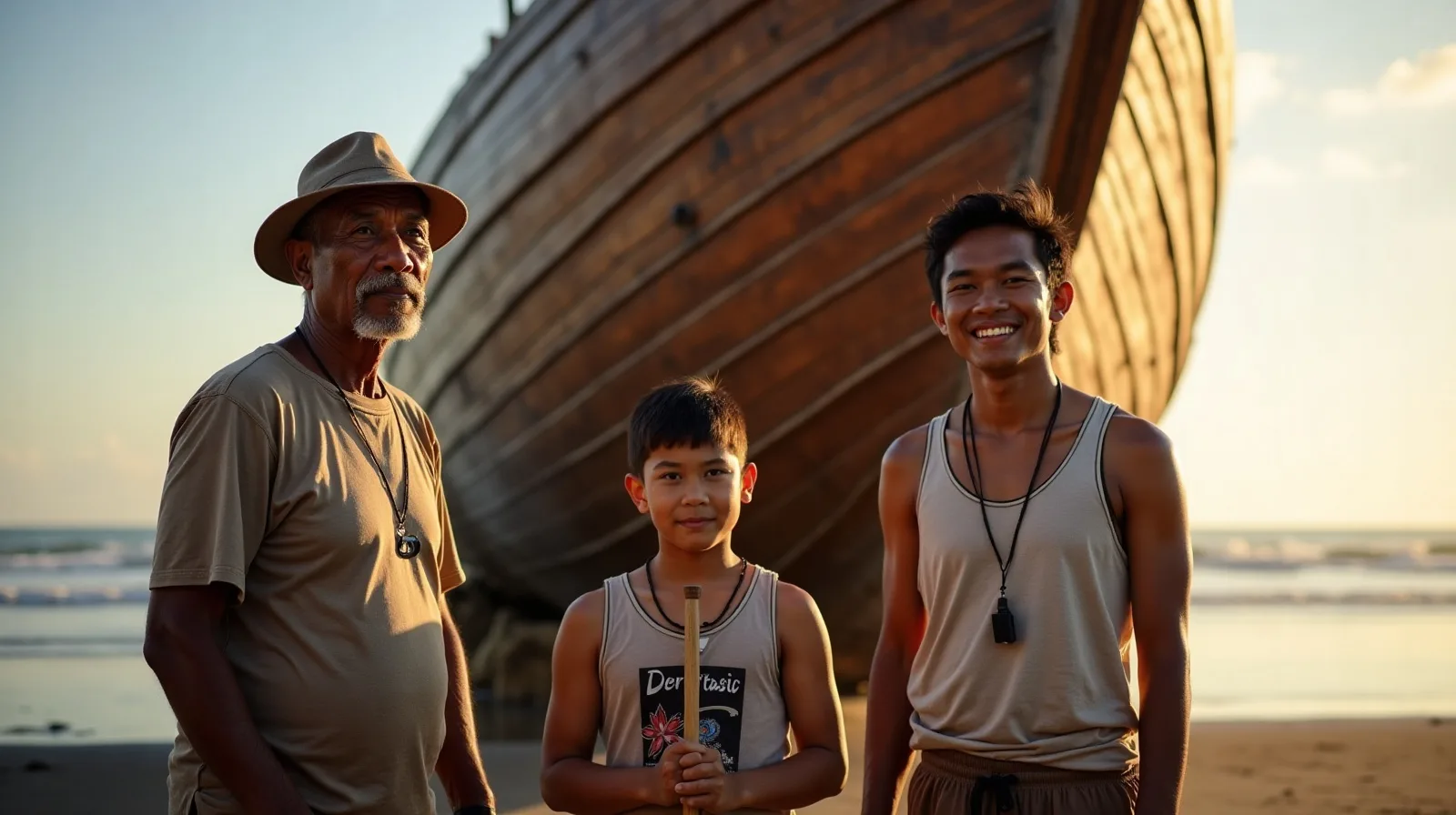
Five Generations, One Beach: Family Lines of Bulukumba Builders
Boatbuilding in Bulukumba is organised by bloodline, not by company. The knowledge of how to raise a phinisi hull — timber selection, the unwritten tables of proportion, the ritual calendar — passes from father to son and uncle to nephew within a handful of Konjo family lines centred on Tana Beru, Ara, and Lemo-Lemo. Many of today’s master builders can name four or five generations of shipwrights behind them, and when you commission a hull you are effectively hiring a lineage: its accumulated judgement, its reputation, and its obligation not to be the generation that failed.
A Craft Inherited, Not Taught
There is no naval architecture school behind a Bulukumba phinisi. The design lives in the heads and hands of building families, transmitted through years of watching and doing that begin in childhood — carrying tools, fairing offcuts, sleeping under hulls on hot afternoons. By the time a son of a building family swings an adze on paying work, he has absorbed a decade of pattern: how a keel line should sit, what a fair curve looks like from ten metres, which timber sings and which sulks. The formal stages of that education are described in our account of how a Konjo shipwright is made.
At the top of each line stands the panrita lopi — the master with the authority to lay out a hull and lead its ceremonies. The title is earned within the family craft system, and its holder carries both the geometry and the liturgy of the build, a dual role we profile in our piece on the master shipbuilder.
The Villages and Their Specialities
Local tradition divides the craft geographically. Ara and Lemo-Lemo historically supplied the carpenters — the men who shape and plank — while Tana Beru and Bira grew as the building beaches and the home of captains and traders who commissioned the ships. The old saying on this coast is that Ara builds them and Bira sails them. Modern practice has blurred the lines: building families from Ara have settled along the Tana Beru shore for generations, and the beaches now function as one continuous yard district, which you can walk end to end — see our profiles of the Tana Beru and Bira yards.
Within that district, each family line carries its own signatures: a preferred bow treatment, a house style in deck furniture, particular relationships with timber suppliers upcountry. Clients who look at several yards quickly learn to read these signatures the way one reads a designer’s hand.
Reputation as Warranty
A five-generation name is the closest thing the coast has to a guarantee instrument. A builder whose grandfather’s hulls are still working cargo routes, and whose father’s hulls carry charter guests through Komodo, cannot afford a bad ship — his sons would inherit the stain along with the tools. This is why due diligence in Bulukumba means asking about boats, not certificates: which hulls did this family launch, where are they now, who captains them? Our completed phinisi portfolio exists precisely to make that lineage of work visible to buyers who cannot walk the coast themselves.
Marriage and migration have carried the lineages beyond their home beach. Builders from the Ara and Tana Beru lines have raised hulls on commission in Kalimantan, Java, and across eastern Indonesia — wherever an owner wanted a true phinisi and was willing to host the crew for a year. The men return with new techniques absorbed and the family name enlarged, and the coast’s gene pool of skill grows accordingly. It is a reminder that “Bulukumba-built” has always described a people more than a place: the beach is simply where the people are densest.
What Five Generations Buys You
An owner benefits from lineage in concrete ways. Proportion rules refined across a century of working hulls translate into vessels that behave predictably at sea. Timber judgement — which log to reject, which stack is truly seasoned — is inherited pattern-recognition no inspection service replicates. And continuity means your boat’s builder will still be there, or his son will, when a refit is due in ten years. It is the same continuity that lets the finished vessels sustain hard commercial schedules, including service alongside the fleet of our sister brand Komodo Luxury’s boat services. When we match a client to a yard, the family line — its style, temperament, and current generation — is the first variable we weigh, as we explain on our about page.
Are all Bulukumba builders from hereditary families?
The leading yards are, and every crew is anchored by lineage men. Skilled workers from outside the old lines do join builds, but layout authority — the right to set a hull’s proportions and lead its rituals — stays within the craft families.
Can a lineage die out?
It can thin, and some have. The corrective has been demand: with charter and yacht commissions steady, sons who might have left for city work are staying, and several families now have more hulls on order than at any time in living memory.
Does family style limit what I can commission?
No — it shapes character, not capability. Modern layouts, engineering, and interiors are specified conventionally; the lineage expresses itself in hull fairness, joinery quality, and the thousand judgements a drawing cannot capture. You choose the family partly for that hand.
How do I verify a builder’s track record?
Ask for named vessels and go find them — or ask us to. We keep records of which families launched which hulls and how those boats have aged in service, and we share that history with commissioning clients before any contract is signed.
Want to meet the building families behind your future hull? Message us on WhatsApp at +62 811-3941-4563 or write to bd@juaraholding.com and we will arrange introductions on the beach itself.