
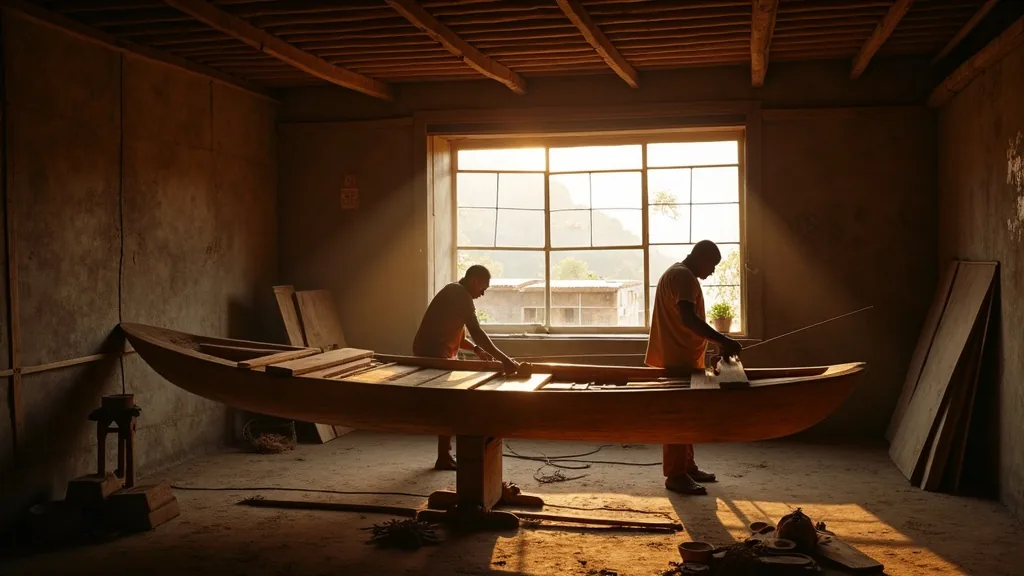
How Bulukumba Builders Construct a Phinisi From Scratch
How do Bulukumba boat builders construct a traditional phinisi from scratch? They select and lay an ironwood keel, raise the hull’s ribs and frame before a single plank goes on, then fasten the whole hull with wooden dowels instead of nails — a frame-first, no-nail method that UNESCO recognized as Intangible Cultural Heritage in 2017. The craft is centered in Tana Beru and Tanjung Bira, two coastal villages in Bulukumba, South Sulawesi, where Konjo shipwrights still build every phinisi by eye and hand-me-down knowledge rather than architectural drawings.
How Do Bulukumba Boat Builders Construct a Traditional Phinisi From Scratch?
Ask any shipwright in Tana Beru and the answer is the same: the hull comes first, everything else follows the hull. Unlike most Western yacht-building, where a hull shell is laid up around or over a mould, phinisi construction starts with the keel and main ribs standing alone on wooden blocks — sometimes for weeks — before planking even begins. This frame-first sequence is what gives a phinisi its distinctive high bow and stern, and it is why no two hulls come out identical. Broadly, the process moves through six stages: timber selection and keel-laying, frame construction, planking with no-nail joinery, deck and superstructure work, rigging and interior fit-out, and finally the launch.
A Living UNESCO Heritage in Tana Beru and Tanjung Bira
Phinisi shipbuilding in Bulukumba is not a revived craft — it never stopped. The Konjo people of Tana Beru and the neighboring beach yards of Tanjung Bira have built wooden sailing ships for local trade, fishing, and inter-island transport for generations, and the same yards now build custom liveaboards for Komodo National Park charter operators and private owners. UNESCO added the art of Indonesian phinisi shipbuilding to its Intangible Cultural Heritage list in 2017, formally recognizing what the villages already knew: this is one of the few places on earth where a large wooden sailing vessel is still built from standing timber to a finished hull without a crane, a laser level, or a digital blueprint. For readers new to the vessel type itself, our guide on what a phinisi actually is covers the rigging, hull shape, and history in more depth.
The Build Process, Stage by Stage
Once a design brief and dimensions are agreed, constructing a traditional phinisi from scratch moves through the same broad sequence whether the finished vessel is a compact day-charter boat or a larger liveaboard built for open-water passages to Komodo or Raja Ampat.
1. Timber Selection and the Keel-Laying Ceremony
The build begins with selecting a single length of ironwood for the keel — the structural spine the entire hull will be built around. In Tana Beru, laying the keel is still marked with a small ceremony, a nod to the belief that a phinisi’s fortune at sea is set from its very first timber. The keel is then set on wooden blocks directly on the beach, in full view of the yard, rather than inside an enclosed shed.
2. Frame-First Hull Construction
Ribs are shaped and raised from the keel one by one, without a mould and, traditionally, without a written blueprint. Master shipwrights work from measurements carried in experience and passed down within families, adjusting each rib by eye as the hull shape emerges. For charter-grade and larger custom builds, this traditional method is now commonly paired with naval-architect specifications for stability and load, so the finished vessel meets both the old craft’s standards and modern seaworthiness expectations.
3. Planking and No-Nail Joinery
Planks are steamed or heated to bend into the hull’s curve, then fixed to the frame and to each other using wooden dowels — locally called pasak — driven through drilled holes, rather than metal nails or screws. This no-nail joinery lets the hull flex naturally with the sea instead of working against corroding metal fasteners, and it is the detail most often cited when people ask how Bulukumba boat builders construct a traditional phinisi from scratch. Seams between planks are then caulked with natural fiber and sealant to make the hull watertight.
4. Deck, Masts, and Superstructure
With the hull closed in, deck beams go in and the deck itself is laid, traditionally in teak for its durability against sun and saltwater. Masts are stepped and the cabin superstructure — wheelhouse, cabin walls, upper deck lounges on larger builds — is framed and closed in.
5. Rigging, Interior Fit-Out, and Finishing
Sails and standing rigging are fitted alongside the vessel’s engines, generators, and mechanical systems, since most working phinisi today sail under both canvas and engine power. Interior joinery, cabins, plumbing, and electrical work follow — this stage is where a build’s finish level, and much of its cost, is determined. Paint and varnish close out construction before the vessel leaves the yard.
6. Launch Day
Because most Bulukumba yards build directly on the beach rather than in a dry dock, launch day means walking or winching the completed hull down the sand and into the water, often with a short ceremony to mark the moment. Sea trials follow shortly after, checking stability, engine performance, and rigging under real conditions before the owner signs off on commissioning.
What Timber Do Bulukumba Shipwrights Use?
Ironwood — known locally as bitti or kayu besi — is the traditional choice for the keel and structural frame because of its density and natural resistance to rot and termites. Teak is used for decking and much of the interior joinery for the same reasons, plus its finish under varnish. As of 2026, mature ironwood is genuinely harder to source at scale than it was a generation ago, and reputable yards increasingly rely on managed timber supply chains and longer lead times to source it responsibly — a fair question to ask any yard directly.
How Long Does It Take to Build a Custom Phinisi?
Because building a traditional phinisi from scratch is entirely hand-worked rather than assembly-line manufacturing, timelines move with hull size, timber availability, and how much custom interior and mechanical work the owner specifies.
| Hull length | Typical build time | Common use |
|---|---|---|
| 15–20 m | Roughly 10–14 months | Day-charter boat, private day vessel |
| 20–30 m | Roughly 14–20 months | Small liveaboard, Komodo overnight charter |
| 30–40 m and above | Roughly 20–24+ months | Full liveaboard, longer expedition vessel |
These ranges are indicative starting points based on typical builds in the region, not fixed quotes for any specific hull — for a fuller breakdown of what drives a build faster or slower, see our phinisi yacht price guide.
How Much Does a Custom Phinisi Cost in 2026?
Pricing varies widely based on hull size, timber grade, engine and electronics specification, interior finish level, and any classification or certification the owner requires for commercial charter operation. There is no single honest number that applies across the board, and we would rather say that plainly than quote a figure that does not match your actual spec. Treat any price range you see online, including ranges we publish, as an indicative starting point — a serious yard will always walk you through a written, itemized quotation before any deposit changes hands, and that quotation is what should govern the build.
From Bulukumba to Bali and Labuan Bajo: Delivery and Commissioning
Once sea trials in Bulukumba waters are complete, the vessel makes a delivery voyage — under its own power and sail, or towed depending on distance and conditions — to its home port, most commonly Bali or Labuan Bajo. A meaningful share of the Komodo liveaboard charter fleet currently operating out of Labuan Bajo was originally built in these same Bulukumba yards before being delivered east. Vessels delivered to Bali typically need a berth equipped to handle a larger wooden-hulled ship for final systems commissioning, provisioning, and ongoing haul-out — our ecosystem partner Kurakura Marina in Bali is one option for that stage once your phinisi arrives.
Commission Your Phinisi Build Through JHG, End to End
Commissioning a custom phinisi means coordinating a Bulukumba shipyard, sourcing the right timber, managing a build timeline that usually runs well over a year, and organizing a delivery voyage — typically while the owner is not based in South Sulawesi at all. Juara Holding Group manages this end-to-end: shipyard selection and vetting, spec and contract negotiation, milestone-based progress inspections during construction, delivery coordination to Bali or Labuan Bajo, and post-delivery commissioning support. Part of Juara Holding Group — operating from Bali across Indonesia since 2015 — we work directly with the shipwright network described above, not through an added broker layer. The full construction-management scope is laid out on our custom phinisi yacht construction page.
If you would like to see, in practical terms, how Bulukumba boat builders construct a traditional phinisi from scratch — visiting an active build, reviewing a yard’s current work, or getting a written quotation against your own specification — message us on WhatsApp at +62 811-3941-4563 or email bd@juaraholding.com. We will walk you through timber options, realistic timelines, and next steps before you commit to anything.