
Hull Forms of the Bira Coast: How Phinisi Shapes Evolved
The hull forms built on the Bira coast evolved through function: the classic phinisi shape — sweeping sheer, raked stem, full midbody, and a…
Read the EntryCraft, culture, and practical guides from the phinisi boatbuilding coast of Bulukumba, Tana Beru, and Bira.
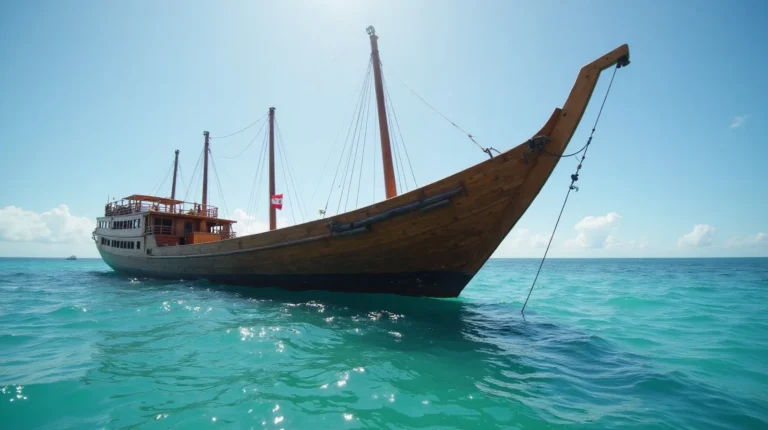
The hull forms built on the Bira coast evolved through function: the classic phinisi shape — sweeping sheer, raked stem, full midbody, and a…
Read the Entry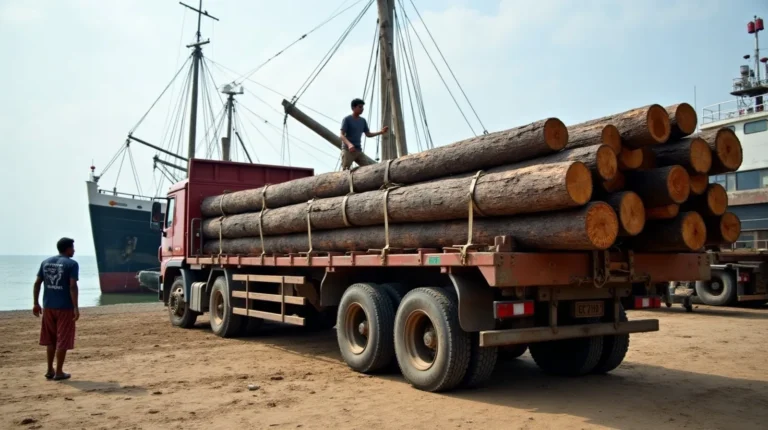
The ironwood (ulin, Eusideroxylon zwageri) in a Bulukumba keel comes overwhelmingly from Kalimantan — Indonesian Borneo — where the species grows slowly in lowland…
Read the Entry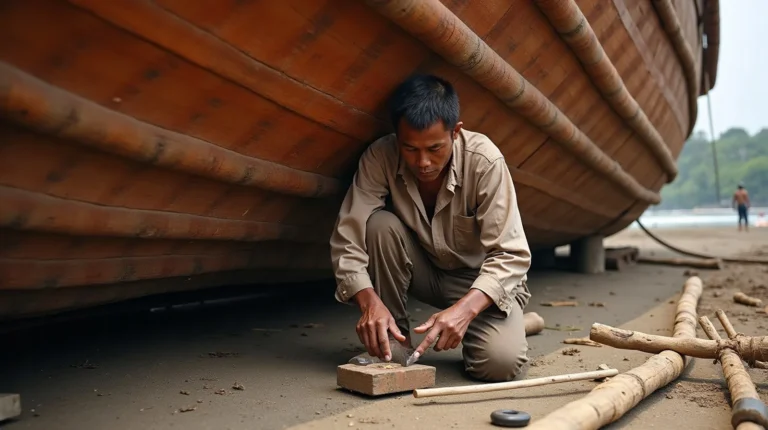
Caulking is what makes a plank-on-plank phinisi hull watertight: fibre — traditionally the bark fibre of the paperbark tree, today often paired with cotton…
Read the Entry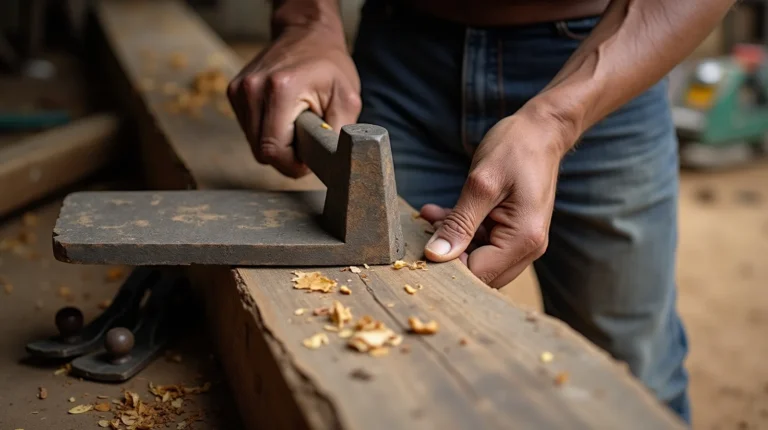
A traditional phinisi yard in Bulukumba runs on a deliberate mix: chainsaws, planers, and drills do the brute conversion work, while the adze, hand…
Read the Entry
Getting to Bulukumba for a build visit is straightforward once you know the route: fly into Makassar (Sultan Hasanuddin International, UPG) — reachable via…
Read the Entry
Yes — you can visit the phinisi yards of Tana Beru, and the beachfront is one of the most remarkable industrial landscapes in Indonesia:…
Read the Entry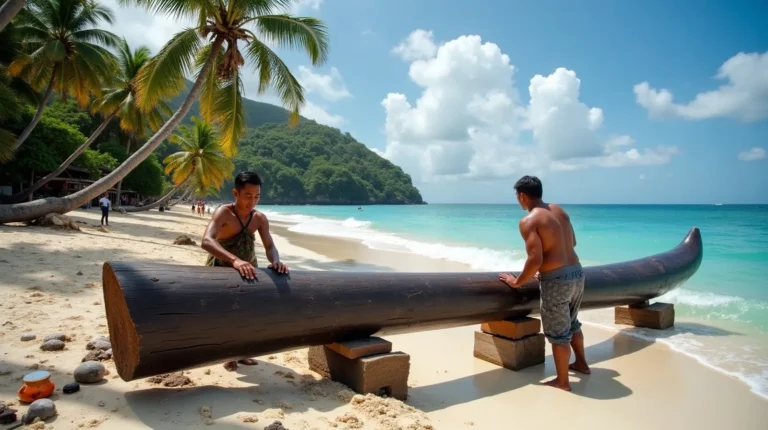
Laying the keel of a phinisi on the Bira shore is both a ceremony and the single most consequential engineering decision of the build:…
Read the Entry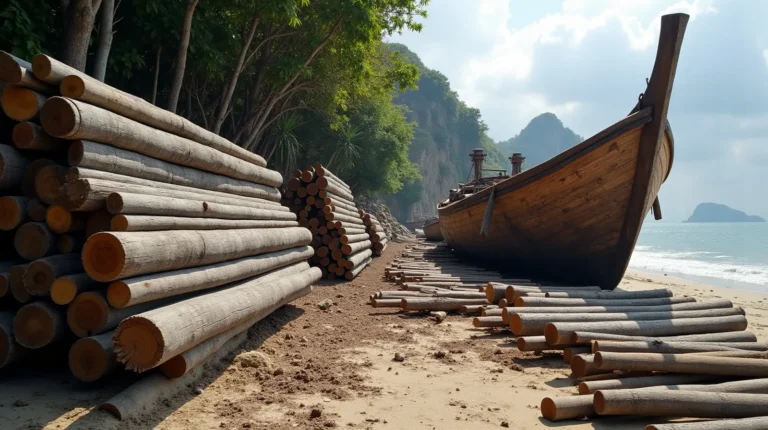
In Bulukumba, boat timber is seasoned the patient way: felled at the right moon and season, moved slowly from forest to coast, then stacked,…
Read the Entry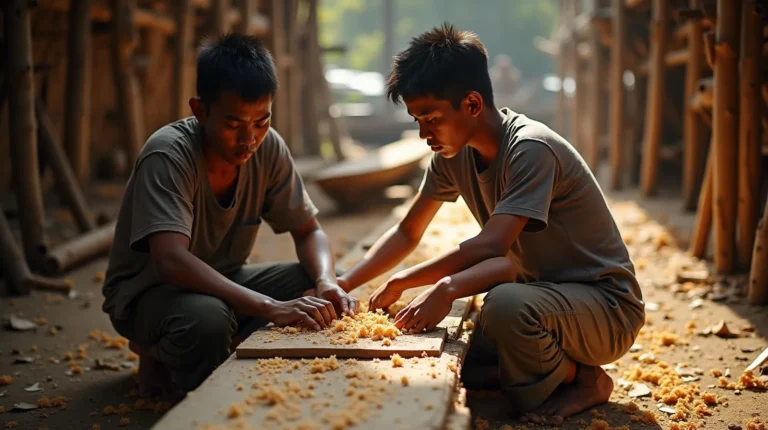
A Konjo shipwright in Tana Beru is made through years of unpaid observation and graded hands-on work inside a family or village crew —…
Read the Entry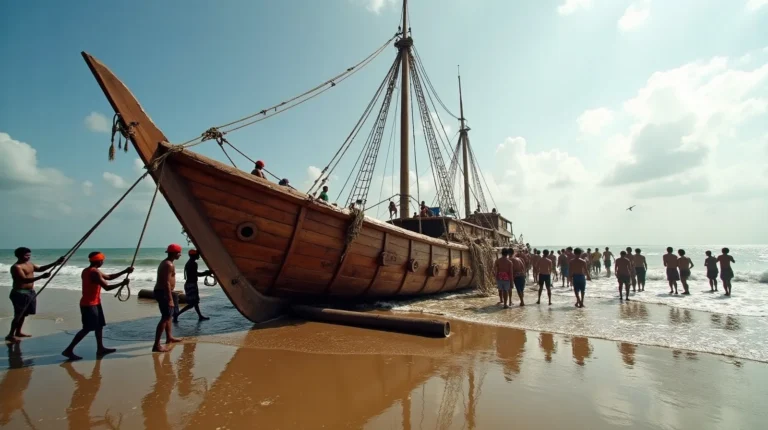
Annyorong lopi is the communal launching ritual of Bulukumba, South Sulawesi, in which a finished phinisi hull — often weighing well over a hundred…
Read the Entry